Premium OEM-compliant parts engineered for demanding fleet operations, golf vehicles, and electric utility cars.
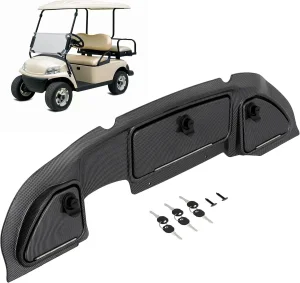
In modern low-speed vehicle (LSV) and electric utility fleet operations, the safety interface relies on one critical point: the wheel assembly. As light electric vehicles (LEVs) scale to meet resort, industrial, municipal, and commercial logistics tasks, demands placed on Club Car tires and rims have shifted. The transition from simple turf travel to high-load, multi-terrain, and street-legal operations requires strict manufacturing discipline. Sourcing managers and industrial procurement agents must prioritize products that carry international certifications—primarily the CE Mark—to ensure adherence to safety, mechanical integrity, and environmental standards.
This whitepaper outlines the structural, mechanical, and regulatory criteria that govern high-precision tires and rims for Club Car systems. By exploring the complex relationship between rubber durometer, ply rating, dynamic bead seating, and structural aluminum casting, we aim to provide commercial procurement leads with the key details needed to mitigate liability, prolong fleet uptime, and optimize rolling resistance.
"Sourcing low-speed vehicle components without verified CE certification exposes operators to mechanical failure liability and prematurely increases overall lifecycle costs. Engineering-grade wheel systems are no longer an upgrade; they are a fundamental compliance mandate."
The commercial sector represents the largest demand hub for high-grade Club Car wheel and rim replacements. Municipalities, airport authorities, industrial complexes, and premier resorts no longer purchase simple off-the-shelf components. Today’s procurement metrics are built around documented cost-per-mile, chemical composition restrictions, and mechanical warranties.
Strict structural compliance matching Club Car DS, Precedent, Tempo, and Onward hub dimensions (typically 4x4 bolt patterns).
Providing dynamic radial fatigue test reports, salt-spray resistance documentation, and REACH/RoHS compliance certifications.
Consolidated shipments that combine tires, rims, electronic components, and suspension parts to reduce logistics costs.
With the growing shift toward electrification, fleets are dealing with heavier payloads due to heavy lithium and lead-acid battery packs. This structural change requires tires with reinforced sidewalls (higher ply ratings) and rims cast from advanced alloys to handle the increased load. Procurement teams must move away from generic golf cart tires toward components specifically engineered for modern industrial work.
Choosing the right tire and rim configuration involves balancing chemistry, physics, and mechanical engineering. The table below details the performance characteristics of our industrial-grade wheel assemblies:
| Performance Indicator | Standard Specification | Industrial Grade (Premium) | Fleet Advantage |
|---|---|---|---|
| Tire Ply Rating | 4-Ply Rating (Standard) | 6-Ply / 8-Ply Reinforced | Reduces punctures; stabilizes heavy electric payloads. |
| Rubber Compound | Standard Synthetic Blend | High-Durometer Silica-infused Rubber | Lowers rolling resistance; extends tread life by 35%. |
| Rim Construction | Stamped Sheet Steel | A356.2 Heat-Treated Aluminum Alloy | Improves heat dissipation; reduces weight on bearings. |
| Bead Seat Design | Mechanical Press-fit | J-Type Safety Bead Lock Contour | Prevents bead slippage during low-pressure operation. |
| Salt Spray Resistance | 24 Hours (Standard Paint) | 500+ Hours (Marine Electrocoat) | Prevents corrosion in coastal resorts and harsh winters. |
The tread pattern of a Club Car tire determines its usability across different terrains. Standard turf tires feature shallow, broad blocks designed to distribute vehicle weight evenly (typically keeping ground pressure below 10 psi) to protect delicate grass. In contrast, multi-terrain and off-road applications require deep directional lugs with self-cleaning channels to clear mud, gravel, and water.
Using silica-infused rubber compounds helps lower the rolling resistance coefficient (RRC). Lower RRC reduces the energy required to move the vehicle. For modern electric golf carts, this directly translates to a 5% to 8% increase in battery range per charge cycle, extending battery life and lowering overall fleet operating costs.
Steel rims are cost-effective for basic utility applications, but cast aluminum rims offer significant mechanical advantages. We cast our premium rims using A356.2 aluminum alloy, which is then heat-treated to a T6 temper. This process creates a lightweight rim with high tensile strength that easily absorbs impacts from curbs and uneven terrain.
Additionally, the lighter weight of aluminum rims reduces unsprung mass. This reduces wear on the Club Car’s steering linkage, front hubs, and independent suspension systems, leading to lower maintenance overhead.
Fleet operations rarely involve a single driving surface. A resort fleet might navigate smooth asphalt, sandy paths, and wet grass all in one trip. Purchasing managers must match the tread pattern and tire construction to their primary operating environment to ensure safety and efficiency.
Standardizing your fleet's tire configurations simplifies maintenance and reduces inventory costs. For example, standardizing on a 6-ply DOT-approved street-legal tire across all utility and passenger vehicles allows maintenance teams to keep one type of replacement assembly in stock, reducing downtime.
Additionally, deploying wheels with built-in bead-lock technology helps prevent bead unseating, even when tire pressure drops. This minimizes the risk of sudden pressure loss and ensures vehicles can safely return to the maintenance depot.
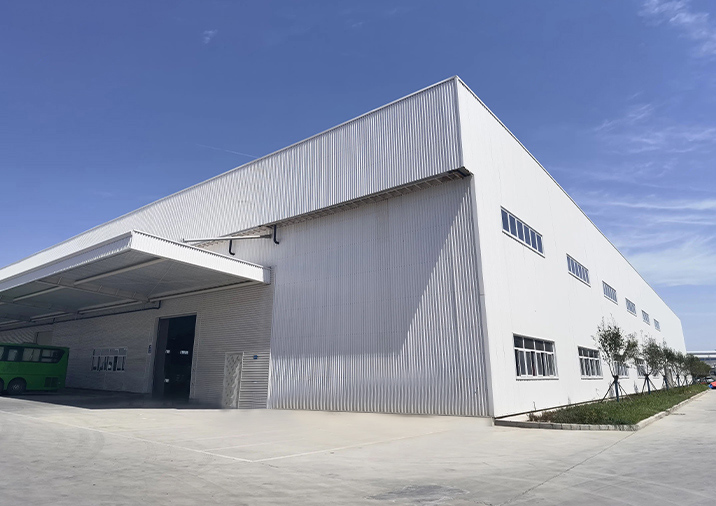
At XXCART INC, we build high-performance electric golf carts and replacement components that meet strict international standards. Over the past 21+ years, we have integrated the strengths of EZ-GO, Club Car, and Yamaha designs to create our own certified electric vehicles and components.
Our 50,000 square meter factory utilizes precision robotic tooling to build chassis components, body panels, and wheel systems. We design our body panels using high-durability, automotive-grade PP (polypropylene) engineering materials to resist UV damage, impact, and fading in outdoor environments.
XXCART vehicles feature responsive steering, independent front suspension systems, and unique operating software. These design choices ensure stability and traction, even when carrying maximum payloads on uneven terrain.
We export to clients in the USA, Italy, Canada, Belgium, Bulgaria, Ireland, Austria, Norway, Sweden, Denmark, Finland, France, Spain, Brazil, Mauritius, Maldives, Thailand, and the Philippines. This global experience helps us design components that comply with local road regulations and environmental standards worldwide.
The LSV market continues to evolve, driven by advancements in material science and fleet connectivity. Key design trends for the next generation of wheels include:
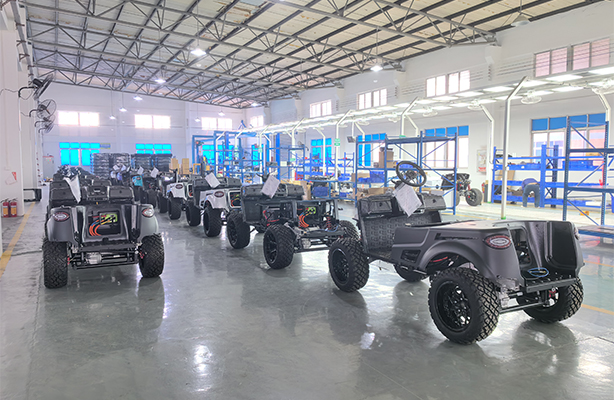
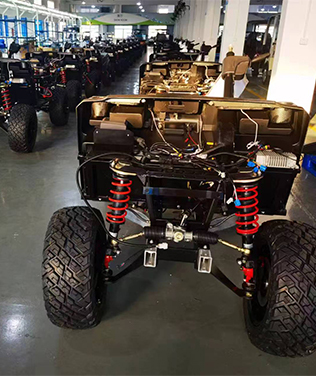
All XXCART parts and wheels undergo strict quality checks. Rims are tested for radial fatigue and impact resistance, and tire assemblies are run on automated dynos to verify alignment and balance. This testing ensures that our products meet or exceed the performance of OEM replacement parts.
Explore our selection of electrical components, starter assemblies, windshield hardware, and high-capacity chargers designed for low-speed vehicles.

 XXCART