A Comprehensive Global Industry White Paper on Advanced Engineering, Supply Chain Dynamics, and OEM/ODM Integration in modern Low-Speed Vehicles (LSVs)
Explore our leading OEM-compatible components engineered for maximum performance, efficiency, and structural reliability.
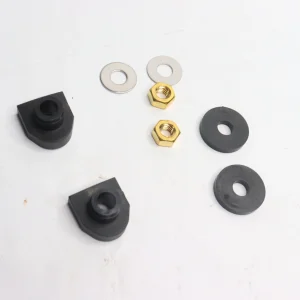
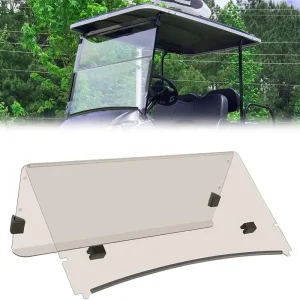
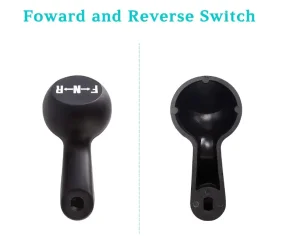
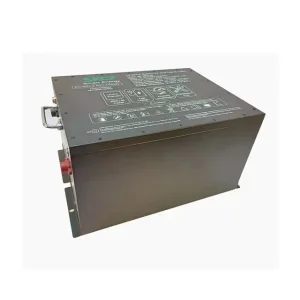
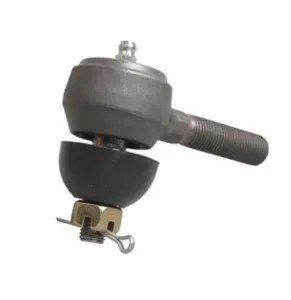
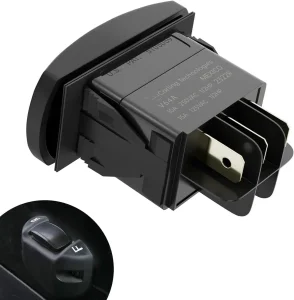
XXCART is a large and powerful manufacturer of electric golf cart which has obtained CE certification. We mainly make high-end customized golf carts, we integrate the advantages of EZ-GO, CLUB CAR, YAMAHA. Meanwhile adopting advanced technology, we have researched and developed our own car series designed in accordance with technical standards of imported electric car.
An in-depth analysis of the shift from utility turf wheels to high-performance structural alloy systems in low-speed electric vehicles.
Modern golf cart wheels have moved past stamped steel. The current industry benchmark relies heavily on flow-formed and gravity-cast A356.2 aluminum alloys. This transition reduces unsprung mass, enhances battery efficiency, and provides superior heat dissipation for braking systems on specialized utility carts.
The standard 4x4-inch (4x101.6mm) Pitch Circle Diameter (PCD) remains the dominant specification. However, off-road applications and heavy-duty utility LSVs are shifting toward robust passenger-car standards, requiring manufacturers to integrate FEA (Finite Element Analysis) to guarantee load capacities exceeding 800 lbs per wheel.
With golf carts operating on public roads in master-planned communities, wheel designs must adhere strictly to low-speed vehicle DOT requirements, SAE J2530 secondary market wheel testing protocols, and regional environmental rules limiting heavy metal usage in chrome and coating processes.
Discover our specialized capability to engineer and produce high-performance components tailored for leading global vehicle brands.
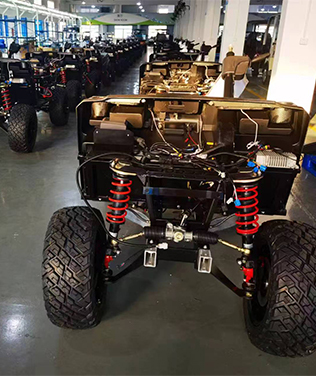
Cover parts are made out of special PP automobile engineering material, which is featured with fashion, beauty and great durability. These cars are equipped with unique and individual operation system, agile and smooth steering system, and independent suspension system.
"We design and develop numerous parts, and control the tooling and manufacturing operations for most of our items, you can be assured of consistently high quality products at a reasonable price, our major OEMs parts is Club Car, E-Z-GO and Yamaha."
At XXCART, we are proud to offer functional parts which are equal or exceed of that OEM replacement parts and accessories at a competitive price.
Why Chinese manufacturing centers like XXCART provide unmatched efficiency, material consistency, and cost-to-performance advantages.
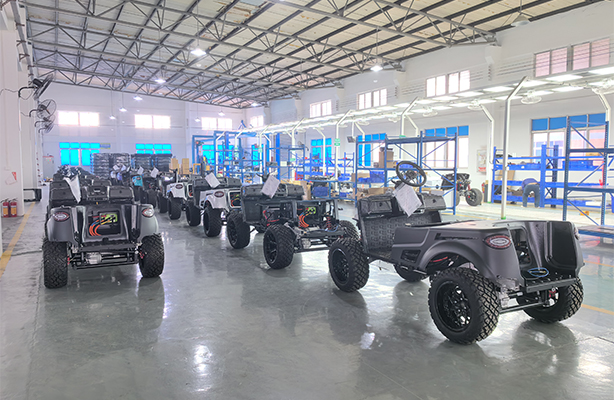
Unlike assembly-only operations, Chinese manufacturers possess dedicated casting foundries, CNC machining facilities, and computerized surface treatment lines. Maintaining in-house mold and tooling development allows us to reduce new product design iteration time from months to weeks.
Advanced manufacturing ecosystems support exhaustive testing protocols including radial fatigue testing, dynamic cornering fatigue setups, and impact testing. These processes ensure every alloy wheel satisfies the structural demands of rugged, multi-passenger golf carts and industrial utility haulers.
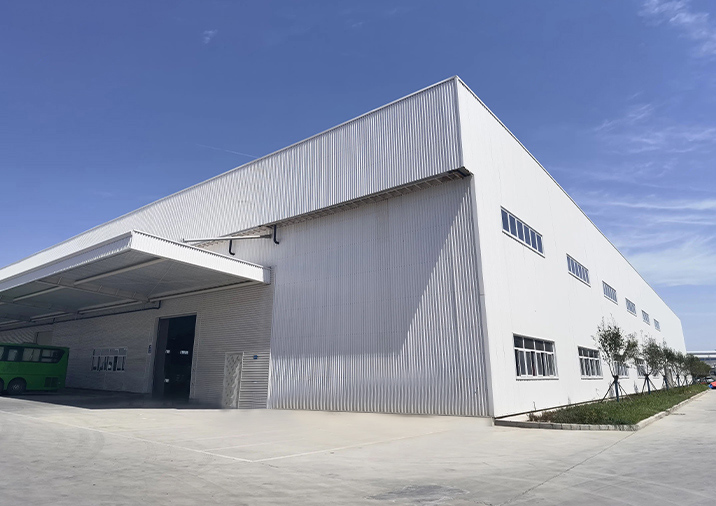
Located within major logistics hubs, XXCART handles containerized sea freight to North America, Europe, and Asia efficiently. Industrial scaling reduces raw material procurement costs, passing savings directly to global OEMs and aftermarket distributors.
Meeting diverse market needs with adaptable configurations, styles, and engineering compliance certifications.
Due to unique style, excellent quality, and perfect service, we have been approved by clients and market in maximum extent. Such as USA, Italy, Canada, Belgium, Bulgaria, Ireland, Austria, Norway, Sweden, Denmark, Finland, France, Spain, Brazil, Mauritius, Maldives, Thailand, Philippines, etc. We have established close partnerships with customers in these regions, sharing brand equity and developing new products collaboratively. We are also able to meet various demands of different customers by adopting varied configurations of color and style.
"We not only provide our customers good before-sale service but also good after-sale service. Even we can arrange engineers to solve the problems for customers. Following the basic concept of Quality first, Customer first."
| Application Region | Environmental Challenges | Recommended Wheel & Tire Setup | Compliance Requirements |
|---|---|---|---|
| Coastal Resorts & Islands (e.g., Maldives, Florida) | Saltwater corrosion, high humidity, loose sandy terrains. | A356.2 Aluminum Alloy with clear protective powder coat. Turf tire thread. | ASTM B117 salt spray testing compliance. |
| European Eco-Cities & Resorts (e.g., Norway, Italy) | Strict weight limitations, historic cobblestone streets, wet surfaces. | Lightweight low-pressure cast alloy wheels with low rolling resistance. | CE certification, RoHS compliance for coatings. |
| North American Communities (e.g., Peachtree City, US) | High-speed pavement transitions, long daily commutes, personal expression. | 12" to 14" alloy rims with low-profile radial street tires. | DOT approval for Low-Speed Vehicle (LSV) road use. |
| Industrial Yards & Heavy Duty Sites (e.g., Brazil, Germany) | High load weights, sharp debris, uneven surfaces. | Heavy-duty steel wheels or reinforced flow-formed aluminum alloys. | Strict FEA structural load rating validation (1200+ lbs). |
A projection of how materials, safety standards, and smart vehicle integration will shape the future of golf cart wheels.
Developing secondary-melt aluminum alloys that dramatically lower the carbon footprint of manufacturing without sacrificing structural performance. Advanced heat-treatment techniques will yield identical tensile strength while using 80% recycled feedstock.
Integrating compact BLE (Bluetooth Low Energy) TPMS (Tyre Pressure Monitoring Systems) directly into the alloy wheel rim profile. This enables commercial fleet managers to track tire temperature and inflation metrics in real time through mobile applications.
Designing wheel profiles that lower drag coefficients on high-speed electric commuter golf carts. Optimizing air flow around the wheel arches improves overall battery range by up to 5% on typical city/resort commutes.
Answering technical questions regarding golf cart wheel configurations, offsets, compatibility, and maintenance.
The standard bolt pattern for most global golf carts (including Club Car, EZ-GO, and Yamaha) is 4x4 inches (or 4x101.6 mm). This means there are 4 lug holes arranged in a circle, and the diagonal distance between the centers of two opposing lug holes is exactly 4 inches. Some specialized industrial or modified carts may feature custom configurations, so verifying PCD parameters before ordering is recommended.
Offset measures the distance between the wheel mounting surface and the true centerline of the wheel.
• Centered Offset (ET0): The mounting surface is exactly in the middle of the wheel width. Common on standard golf carts.
• Negative Offset: The mounting surface is closer to the inside of the cart, pushing the wheel outwards. This widens the stance, providing stability, and is common on lifted golf carts.
• Positive Offset: The mounting surface is closer to the outside face of the wheel, pulling the wheel inward towards the cart frame.
Yes, but tire profile height must be adjusted. To fit 12" or 14" wheels on a non-lifted cart, you must pair them with low-profile tires (e.g., 205/30-14 or 215/40-12) to ensure the total outer diameter does not exceed 18 inches. If the outer diameter exceeds 18 inches, the tires will rub against the wheel wells and body panels unless a lift kit (typically 3" to 6") is installed.
Aluminum alloy wheels offer significant performance advantages over steel:
1. Reduced Weight: Less unsprung weight decreases strain on electric motors and extends battery range.
2. Corrosion Resistance: High-grade alloys resist oxidation, making them ideal for coastal resorts and high-humidity areas.
3. Design Flexibility: Casting alloys allows for complex, visually striking spoke geometries that improve vehicle aesthetics.
However, steel wheels remain a cost-effective option for rugged industrial utility fleets where aesthetic styling is secondary.
XXCART operates under ISO 9001 and CE certification frameworks. Our QA process includes incoming raw material spectroscopic inspection (verifying alloy purity), automated X-ray crack detection in casting runs, and physical testing (radial load, fatigue, dynamic cornering). Every containerized shipment is documented for material traceability from the raw metal block to the final machining stage.
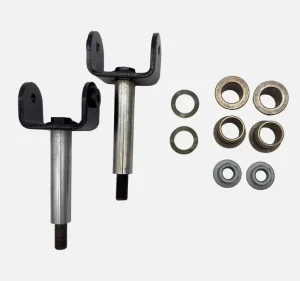
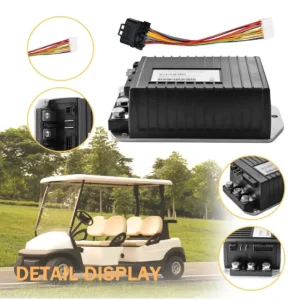
Complete your vehicle optimization with our high-end, OEM-standard replacement parts, precision-built for durability.
 XXCART