In the rapidly changing world of light electric vehicles (LEVs), the golf cart has transformed. It is no longer just for leisure on golf courses; it has become a vital utility tool used in commercial environments, multi-passenger transit, and industrial applications. At the core of this transition is the drivetrain, where OEM Golf Cart Axles play a critical role. Choosing the right axle assembly is essential for ensuring vehicle safety, maximizing energy conversion efficiency, and extending the operational lifespan of light commercial vehicle fleets.
Modern electric platforms utilize high-torque brushless AC (BAC) motors and lithium-ion batteries. These powertrains place significantly higher physical demands on transaxles, differentials, and axle shafts compared to traditional DC-powered setups. As a result, sourcing managers, global distributors, and engineering teams must look beyond basic dimensions. They need to analyze mechanical properties, chemical composition, heat treatment precision, and spline designs.
A golf cart axle serves two main roles: supporting the vehicle's structural load and delivering rotational torque to the wheels. This requires a balanced approach to design, combining rigidity with shock absorption.
Rear transaxle assemblies integrate the differential gears with the electric motor input shaft. For brands like Club Car, E-Z-GO, and Yamaha, rear axle shafts must be designed to handle offset loads. They feature hardened splines (typically 19-spline configurations) to prevent slippage and wear under high startup torque.
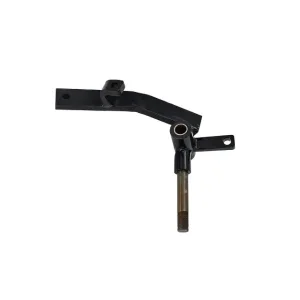
Front axles require precise geometry to maintain steering alignment and control tire wear. We build steering knuckles, spindle assemblies, and control arms with strict tolerances, minimizing radial runout to ensure stable tracking at high speeds.
For specialized vehicles like cargo utility trucks and off-road passenger carriers, standard gear ratios (such as 12.44:1) can be modified. We provide custom gear profiles (ranging from 6:1 for high speeds to 18:1 for steep slopes) to optimize torque output.
Our manufacturing processes focus on durability and performance under load. Axles operating in demanding environments—like coastal resorts with salty air or heavy industrial complexes—require specialized materials and surface treatments to prevent failure.
Our raw materials are sourced from certified steel mills, using premium carbon and alloy steels like AISI 1045 and AISI 4140 chrome-moly steel. These materials provide the necessary toughness and wear resistance.
To ensure long-term reliability, the outer surface of our axle shafts undergo medium-frequency induction hardening. This process creates a hardened outer layer (typically 58-62 HRC) to resist torsional stress and wear, while keeping the core ductile (28-32 HRC) to absorb sudden shocks without fracturing.
| Material Type | Tensile Strength (MPa) | Yield Strength (MPa) | Typical Application | Environmental Durability |
|---|---|---|---|---|
| AISI 1045 Carbon Steel | 585 Min | 310 Min | Standard passenger golf carts, light turf service | Good (requires protective surface coating) |
| AISI 4140 Alloy Steel | 655 Min | 415 Min | Heavy-duty utility, multi-passenger shuttles | High resistance to fatigue and cracking |
| Bespoke Forged Alloys | 720 Min | 500 Min | Custom industrial and extreme off-road platforms | Excellent, designed for high-stress applications |
Every batch of raw material is verified using optical emission spectrometers to guarantee chemical uniformity. Our CNC machining lines achieve tolerances within +/- 0.01mm on bearing journals and spline profiles, ensuring direct compatibility with OEM differentials from brands like Club Car, E-Z-GO, and Yamaha.
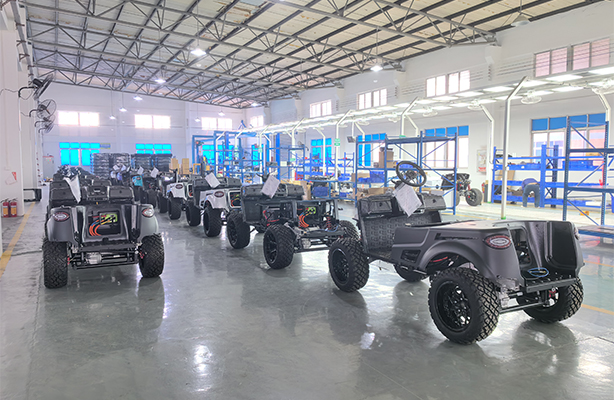
XXCART INC is an established manufacturer of high-end electric golf carts and precision drivetrain components. Our engineering capabilities allow us to integrate design concepts from Club Car, E-Z-GO, and Yamaha, combined with advanced technology to produce robust transaxle systems.
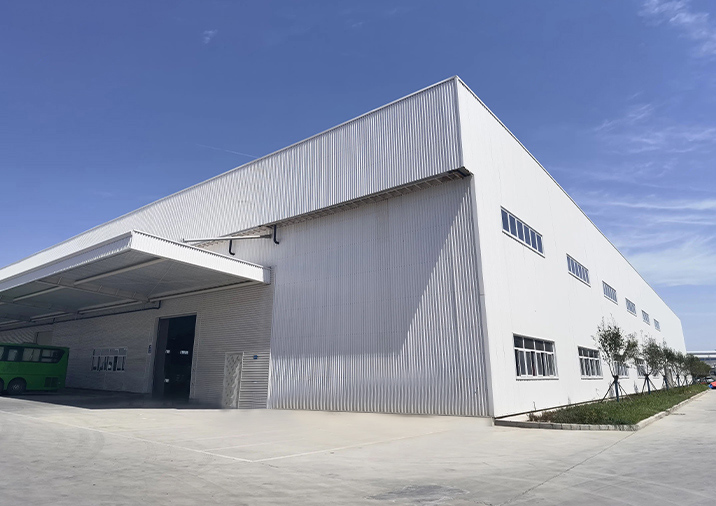
Operating from our 50,000 square meter factory, we control the entire production line. This includes initial forging, CNC gear cutting, heat treatment, dynamic balancing, and noise testing. This vertical integration allows us to deliver high-quality products at competitive prices, with parts that meet or exceed original OEM specifications.
We offer full-service OEM and ODM support. Whether you need custom axle dimensions, specialized spline profiles, or integrated disc brake mounting flanges, our engineering team can translate your CAD files and technical requirements into production-ready designs.
As a global exporter supplying over 100 countries, we understand that regional compliance and certification requirements vary significantly.
Our products are regularly shipped to key international markets, including the United States, Canada, Germany, Italy, Belgium, Bulgaria, Ireland, Austria, Norway, Sweden, Brazil, Mauritius, Maldives, Thailand, and the Philippines. Each market has specific standards for vehicle components.
Vehicles imported into the EU must carry CE Certification. Our drivetrain parts, electronics, and structural components are engineered to meet these directives, ensuring smooth customs processing and regulatory clearance.
To meet ANSI/ILTVA Z130.1 standards for golf course and personal transport vehicles, our axles undergo fatigue testing to confirm they can handle standard vehicle weights and tow capacities.
For seaside resorts and islands like the Maldives, we offer specialized rust prevention coatings (including electroplating and powder coating) to protect against humidity and salt air corrosion.
The light electric vehicle market is evolving, and drivetrain components must advance to match new vehicle capabilities.
Future axles will include built-in speed, temperature, and torque sensors. These sensors feed real-time data back to the motor controller to optimize power output, protect against excessive heat, and provide early warnings for required maintenance.
As modern electric golf carts run quieter, drivetrain noise becomes more noticeable. We use CNC helical gear grinding to reduce tooth contact noise, ensuring quiet operation at all speeds.
Reducing unsprung weight helps extend battery range. We are developing high-strength aluminum alloy axle housings and hollow-core axle shafts that reduce overall weight while maintaining structural strength.
 XXCART