In the rapidly evolving global micro-mobility and fleet management sectors, lighting accessories have progressed from basic incandescent utility lamps to highly integrated, digitally managed light-emitting diode (LED) projection matrices. As regulatory frameworks clamp down on public-road vehicles and high-end closed-environment transport systems, manufacturers face the stringent task of offering products that exhibit excellent optical metrics, supreme ingress protection, and uncompromising safety.
For commercial procurement officers, wholesale distributors, and original equipment manufacturers (OEMs) across Europe, North America, and Southeast Asia, sourcing CE certified golf cart head lights is not simply a matter of aesthetic enhancement. It is a critical risk-mitigation policy. Conformity with the *Conformité Européenne* (CE) directive verifies that the products have undergone testing for electromagnetic compatibility (EMC), low-voltage safety parameters, and restriction of hazardous substances (RoHS). This document provides a deep structural breakdown of why compliance is vital, the manufacturing process inside advanced Chinese factories, and how integration with OEM configurations (such as Club Car, E-Z-GO, and Yamaha) is achieved.
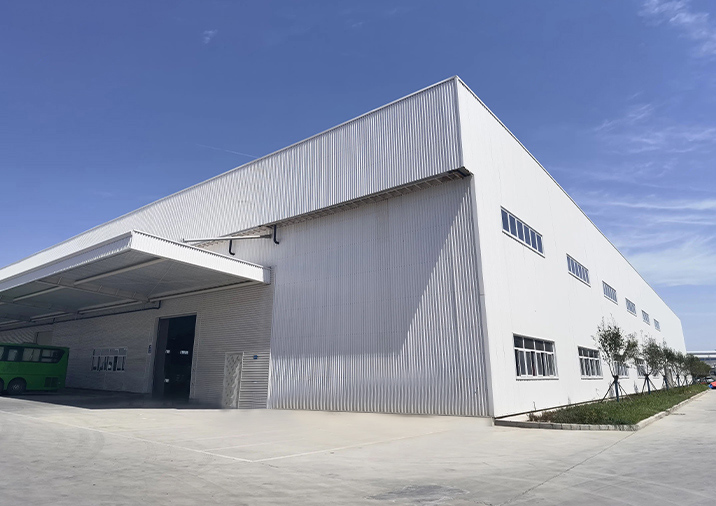
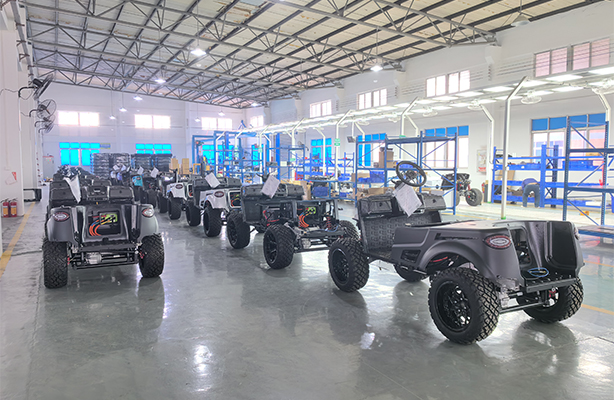
XXCART INC is a large-scale, vertically integrated electric vehicle manufacturer specializing in custom, high-end electric golf carts and their corresponding accessories, including CE-marked headlights, suspension setups, and structural body elements. With over 21 years of specialized design, tooling, and manufacturing history, XXCART has successfully combined the distinct engineering advantages of top-tier platforms—such as E-Z-GO, Club Car, and Yamaha—with proprietary, patent-backed innovations to create a robust and durable product ecosystem.
“At XXCART, our operational philosophy is founded on the concept of 'Quality first, Customer first'. We control the tooling, design, and assembly lines to ensure that every replacement part or accessory exceeds OEM specifications at a highly competitive market price.”
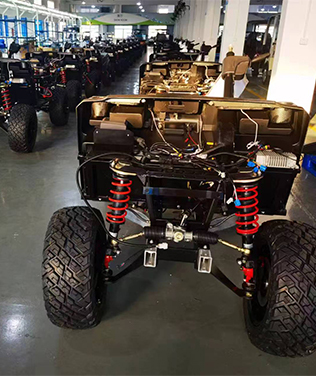
Our vehicle body components and headlight housings are constructed using specialized automotive-grade polypropylene (PP) engineering plastics. This material boasts superior impact absorption, UV stabilizers to prevent yellowing or embrittlement under direct sunlight, and outstanding resistance to chemicals and environmental debris. Supported by an independent double A-arm suspension configuration and responsive steering mechanics, our carts and accessories deliver longevity that matches the requirements of complex international transit fleets.
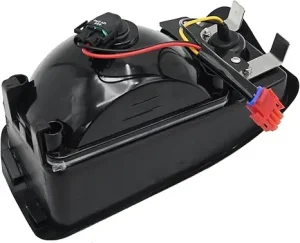
We implement CAD-designed parabolic reflectors and solid-state SMD LED chips. This setup produces a well-defined cut-off line, maximizing light distribution without blinding oncoming operators. Perfect for resorts and industrial zones.
Our headlights feature dual-sealed co-molded silicone gaskets and breathers to achieve an IP67 rating. Condensation is eliminated in coastal environments, ensuring continuous night operation in tropical climates.
Equipped with isolated buck-boost driver circuits, our light kits handle power fluctuations from 12V to 48V without flickering. They pass rigorous EN 55015 tests for electromagnetic compatibility, avoiding battery management system interference.
One of the core strengths of sourcing components from a consolidated manufacturer in China like XXCART is our end-to-end tooling control. Rather than acting as a simple assembly shop, our factory designs and develops the actual molds and stamping plates for the plastic covers, brackets, and inner housings. Because we maintain tight tolerances on our internal machinery, we guarantee that all aftermarket assemblies match the critical dimensions of major brands.
Our domestic supply network in East China allows us to source pure grade aluminum for PCBs, high-quality LEDs, and electrical connectors at optimized prices. This cost-efficiency is passed down to global buyers in the form of competitive pricing for high-volume orders. In addition, our manufacturing setup is optimized to pivot between low-volume custom orders and high-volume container runs, allowing us to respond quickly to seasonal market demands.
Depending on the target jurisdiction, electric golf carts are classified either under recreational vehicles or low-speed vehicles (LSVs). In the European Union, operating a golf cart on public access routes requires components—specifically the lighting package—to carry the CE mark. To obtain this, headlights are subjected to a battery of laboratory tests:
1. Electromagnetic Compatibility (EMC Directive 2014/30/EU): Testing verifies that the high-frequency switching frequency of the LED driver does not produce electromagnetic emissions that disrupt standard vehicle electronics or radio signals.
2. Low Voltage Safety (LVD Directive 2014/35/EU): Ensures that system wiring insulation, harness terminal blocks, and internal connections prevent electrical shocks, short-circuits, and thermal runaway under heavy duty cycles.
For companies located in North America, we also produce headlights that align with the Federal Motor Vehicle Safety Standards (FMVSS 500) for low-speed vehicles, which require specific illumination distance, reflector angles, and integrated turn indicator outputs. Working with a compliance-ready factory like XXCART helps prevent costly custom seizures, regulatory audits, and liability issues.
Modern electric utility vehicles operate in demanding scenarios beyond typical flat golf fairways. Our design engineering factors in these diverse operating conditions:
High humidity and salt-laden air accelerate corroding processes in standard metals. XXCART uses tin-plated oxygen-free copper harnesses and hermetically sealed lenses to prevent internal moisture intrusion.
Urban mixed traffic requires precise headlight cutoff patterns. This helps drivers navigate pedestrian zones at night without casting blinding glare toward oncoming traffic or residential windows.
Chemical facilities and logistics yards require robust impact protection. The use of high-impact polycarbonate lenses prevents breakage from loose gravel, low-hanging tree branches, or tools.
 XXCART