Explore our state-of-the-art replacement parts engineered to exceed OEM standards for durability, precision, and performance.
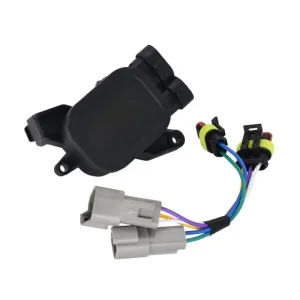
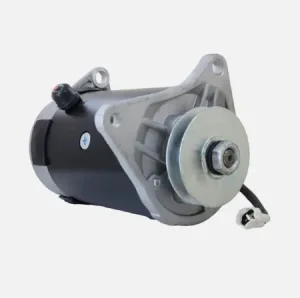
In the rapidly transforming landscape of Light electric vehicles (LEVs) and low-speed electric vehicles (LSEVs), speed measurement systems represent a core pillar of operational safety, motor control, and drivetrain efficiency. Ezgo speed sensors serve as the vital feedback link in high-performance electric drive controllers. By monitoring the speed of the motor armature, these sensors allow controllers to dynamically govern speed curves, balance torque requirements, and execute advanced regenerative braking protocols.
At XXCART INC, we focus on delivering CE-certified Ezgo speed sensors designed to withstand the harsh mechanical and electrical environments of commercial golf fleets, industrial vehicles, and urban utility platforms. The integration of high-resolution Hall effect tracking systems ensures microsecond-level accuracy, enabling smooth acceleration and preventing dangerous rollbacks on inclined terrains.
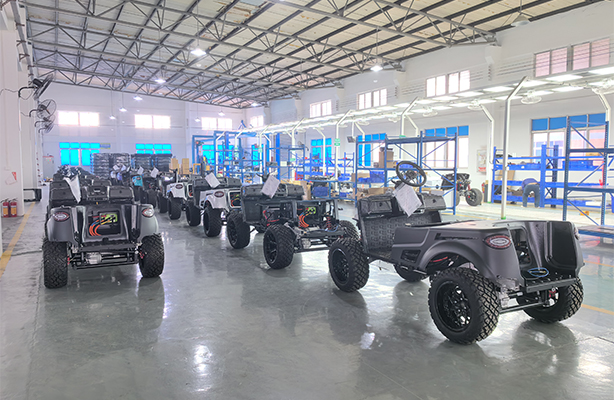
Utilizes dual-element Hall effect sensors to capture high-resolution square-wave pulses. This system senses the precise rotational velocity and direction of the magnet ring attached to the motor shaft, preventing phase lag and signal degradation under extreme operating conditions.
Fully compatible with 5V to 15V logic supplies direct from controllers such as Curtis, Kinetek, and Navitas. The robust input filtering safeguards the sensor against transient voltage spikes and signal feedback commonly generated by high-power induction motors.
Equipped with neodymium or high-remanence samarium-cobalt magnetic rings that maintain strong and crisp magnetic flux densities up to 150°C. This ensures zero signal loss even during extended hill climbs or heavy-duty cargo towing operations.
Deploying electric vehicles in modern industrial, resort, or municipal landscapes demands compliance with stringent regulatory frameworks. Our Ezgo speed sensors carry official CE Certification, ensuring compliance with key directives: European Electromagnetic Compatibility (EMC) Directive 2014/30/EU and safety standards outlined under EN 61000. This certificate guarantees that our sensors do not emit electromagnetic interference that could compromise other vehicle electronic components, nor are they susceptible to failure in high EMF zones.
Additionally, the build quality utilizes IP67 ingress protection, shielding internal Hall circuits from road dust, standing water, and salt spray. For fleet managers, purchasing CE-marked components is a direct step toward lowering liability, raising vehicle reliability indices, and ensuring seamless compliance with local light vehicle regulations.

From coastal tourist hubs in Southern Europe to sprawling distribution warehouses in North America, reliable speed feedback systems determine operational longevity.
Maintains smooth, low-noise passenger transport inside protected nature reserves and luxury resorts across coastal regions, where high humidity and salty air demand IP67 level sensor sealing.
Assures precision speed tracking and automated anti-collision control in autonomous and semi-autonomous industrial towing tuggers operating within tight warehouse aisles.
Delivers constant speed control parameters to municipal service vehicles doing park maintenance, security sweeps, and localized emergency services across urban public spaces.
The electrification of low-speed drivetrains is entering a new era of intelligence. Sensor subsystems are shifting away from simple frequency generation toward integrated smart nodes. The development roadmap for our next-generation Ezgo speed sensors focuses heavily on integrating direct CAN-bus communication protocols, enabling self-diagnostic capabilities and instant communication with vehicle-wide IoT tracking systems.
Future iterations will feature predictive failure diagnostics, which analyze micro-fluctuations in magnetic flux to identify physical bearing wear or gear backlash before a failure happens. This transition to predictive maintenance models will significantly lower downtime for logistics fleets and rental operators globally.
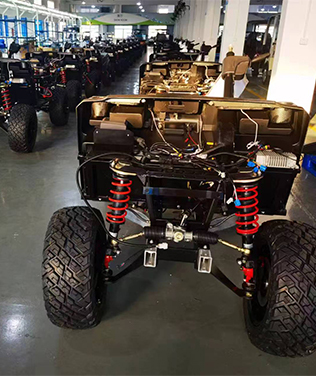
XXCART INC is a large-scale manufacturer of electric golf carts and precision components with a solid reputation built over 21 years of development. We integrate the technical advantages of major brands including EZ-GO, Club Car, and Yamaha while researching and developing our own proprietary vehicle and part architectures. Our cover panels are molded from specialized automobile PP engineering plastics to guarantee impact resistance, high UV stability, and long-term surface finish luster.
With an expansive production facility spanning 50,000㎡, XXCART serves clients in over 100 countries. Our design philosophies leverage advanced independent suspensions, highly responsive steering matrices, and custom-tuned power management modules. Whether you require custom speed sensor pinouts, specialized wire harness lengths, or dedicated branding plates, our OEM/ODM custom division stands ready to deliver tailored solutions matching your technical specifications.
Expert technical insights to resolve common integration, diagnostic, and calibration issues related to Ezgo speed sensors.
When an EZGO speed sensor fails, the drive controller loses the essential RPM feedback required to govern motor operation. The primary indicator is the vehicle entering "limp mode," where top speed drops dramatically to about 2-3 mph. Additionally, the electronic regenerative braking/roll-away safety feature (which stops the cart from rolling down hills on its own) will fail. In PDS systems, the controller may emit diagnostic fault codes (such as beep configurations or blinking LED diagnostics on the controller unit) pointing to a speed sensor pulse failure.
Our speed sensors are designed to exact physical, electrical, and plug-in specifications matching OEM standards (e.g., matching the classic EZGO PDS 73327G01 and TXT models). We utilize identical pinout configurations and connector types to guarantee plug-and-play installation without requiring wiring harnesses or modifications. Furthermore, the signal output matches the exact pulse-per-revolution ratio expected by the controller to prevent speedometer errors or system faults.
The most common causes of sensor failure are water ingress, vibration-induced fatigue, and thermal stress on the internal Hall sensor. Our sensors use epoxy potting compounds to fully encapsulate the internal circuitry, ensuring an IP67 rating that isolates electronics from water, dirt, and oil. The sensor housing is manufactured from glass-reinforced plastic to withstand the high-frequency vibration transmitted by the motor axle during off-road or industrial usage.
Yes, CE certification implies thorough testing against electromagnetic interference (EMI). High-performance AC or DC motors draw high currents and generate significant magnetic fields, which can disrupt unshielded circuits. A CE-certified sensor features internal decoupling capacitors and shielded cabling that prevent electromagnetic noise from distorting the pulse signal, ensuring steady performance even at high motor loads.
Ensure complete vehicle reliability with our premium range of electrical and mechanical replacement accessories.
 XXCART