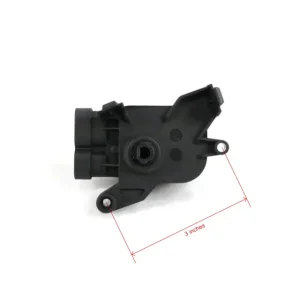
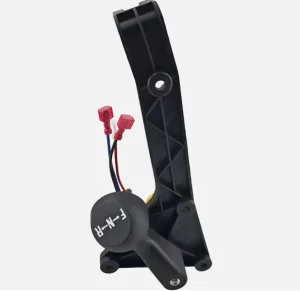
XXCART is a large and powerful manufacturer of electric golf carts which has obtained CE certification. We mainly make high-end customized golf carts, and we integrate the structural and aesthetic advantages of industry standards like EZ-GO, CLUB CAR, and YAMAHA. Meanwhile, adopting advanced technology, we have researched and developed our own proprietary car series designed in accordance with rigorous technical standards of imported electric vehicles.
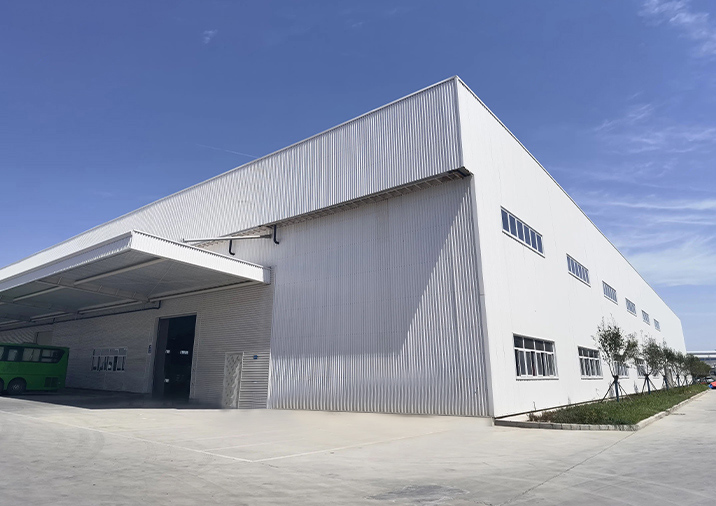
Adhering to quality bearing responsibility, driving innovation to upgrade product safety and environmental performance.
XXCART adheres to the quality bearing responsibility and is committed to providing users with high-quality, safe and environment-friendly high-performance products that guarantee mechanical durability under rugged terrain conditions.
We leverage advanced metallurgy and manufacturing processes to create competitive advantages. We strive to promote industrial progress, support global fleet distribution, and realize product performance upgrading through technology innovation.
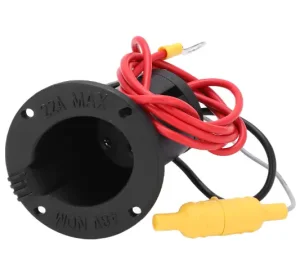
Our bespoke engineering solutions highlight service value. We strive to meet our customers' growing customization expectations with continuously upgraded materials, geometries, and electrical harness accessories.
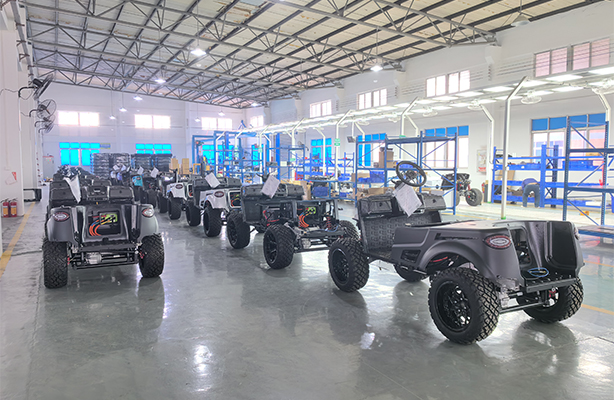
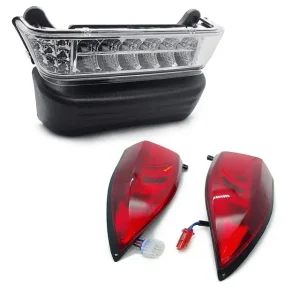
At XXCART, we engineer premium structural components and body shells. Our vehicle cover parts are made out of special PP automobile engineering materials, which are featured with fashion, beauty, and great structural durability.
These specialized fleet models are equipped with unique and individualized operation systems, agile and smooth steering geometries, and state-of-the-art independent suspension setups that handle rough terrain effortlessly.
Send an Inquiry"Standing on the mountain peak, we can see the farther world." Due to our unique styling, excellent quality, and comprehensive technical support, XXCART products have earned maximum approval across demanding international markets.
We maintain robust dealer relationships in the USA, Italy, Canada, Belgium, Bulgaria, Ireland, Austria, Norway, Sweden, Denmark, Finland, France, Spain, Brazil, Mauritius, Maldives, Thailand, and the Philippines. By sharing brand value and co-developing new products, we meet diverse localization demands through varied color configurations, motor powers, and custom suspension profiles.
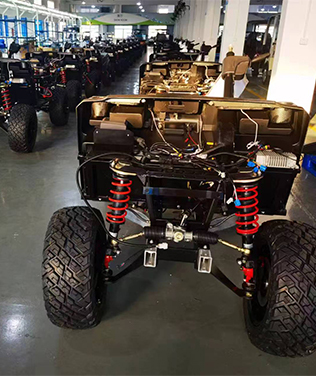
We design and develop numerous critical components and control the tooling and manufacturing operations for most of our catalog items. This closed-loop control guarantees consistently high-quality products at competitive prices. Our replacement and upgrade parts match or exceed original OEM specifications for Club Car, E-Z-GO, and Yamaha.
The global demand for utility terrain vehicles (UTVs) and modified Low-Speed Vehicles (LSVs) has transitioned from traditional golf course navigation to demanding commercial, agricultural, and industrial transport. Standard electric vehicles often possess limited ground clearance, making them vulnerable to undercarriage impacts, drivetrain damage, and suspension fatigue. Developing high-stability suspension upgrade kits, commonly termed lift kits, is crucial to overcoming these limitations.
Modern lift kits are classified into three core engineering designs: Spindle Lift Kits, A-Arm Lift Kits, and Drop Axle Lift Kits. Spindle kits replace the stock steering spindle, shifting the wheel mount point downward. This layout is ideal for mild terrains, preserving the stock suspension geometry. A-Arm lift kits replace the entire front suspension system, utilizing longer control arms to increase ground clearance and track width. This design enhances wheel travel and dampening capability, making it the standard for rough industrial sites.
Adding lift kits alters the vehicle's roll center and steering axis. High-precision kits incorporate corrected Ackermann steering geometry to minimize tire scrub, maintain stable turning radii, and prevent high-speed rollover hazards.
Lifting a golf cart increases torsional stress on the rear axle and front steering linkages. Certified manufacturers utilize heavy-duty welded plate steel to prevent joint fatigue under loaded payload conditions.
Industries ranging from large-scale airport logistics and chemical manufacturing plants to coastal resorts and luxury residential complexes rely heavily on utility fleets. These environments demand reliable vehicles that can navigate obstacles like unpaved paths, steep inclines, and gravel roads. In regions like North America, the Middle East, and Europe, purchasing lifted utility vehicles has become a critical operational requirement rather than an aesthetic preference.
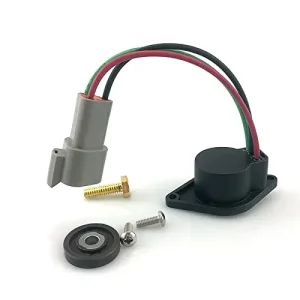
Furthermore, the growth of commercial off-road operations requires components that integrate seamlessly with high-capacity electric drivetrains. A lifted cart fitted with larger tires requires greater torque, placing a higher load on the electric motor and speed sensors. This mechanical strain highlights the importance of matching high-performance lift systems with reliable auxiliary components, such as high-precision speed magnets, heavy-duty solenoids, and optimized throttle potentiometers like the MCOR conversion kit, which prevent throttle signal degradation under harsh operational conditions.
Exporting mechanical assemblies to the European Union and other international regions requires strict adherence to safety directives. CE certification acts as a quality benchmark, verifying compliance with the Machinery Directive (2006/42/EC) and the Electromagnetic Compatibility (EMC) Directive (2014/30/EU). For lift kits and steering elements, structural integrity is paramount.
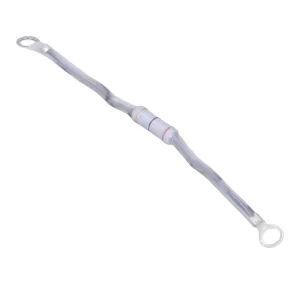
CE-compliant lift kits must undergo extensive structural testing, including FEA (Finite Element Analysis) simulation and physical load testing. The welds must withstand dynamic tensile and shear stresses without cracking. Additionally, because lifting a vehicle affects its brake line routing, electrical wire lengths, and steering linkage angles, manufacturers must supply certified replacement components—such as extended brake lines and custom wiring harnesses—to prevent failures under operational conditions.
Different environments present unique operational challenges. A golf cart operating on a sandy resort in the Maldives requires different alignment characteristics than a vehicle transporting maintenance gear across a hilly municipal park in Norway or a construction site in the United States.
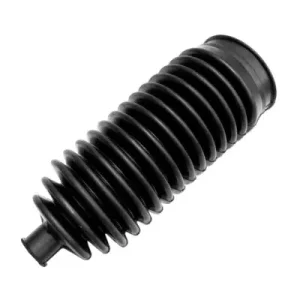
For sandy and muddy environments, suspension designs must prevent build-up that can jam steering pivots. A-Arm lift systems with greaseable Zerk fittings allow operators to easily flush out contaminants during routine maintenance. In colder Scandinavian climates, rubber dust boots and polyurethane bushings must resist cracking at sub-zero temperatures. In hilly terrains, camber and toe alignment adjustments are critical to maximizing tire contact area, ensuring maximum traction and preventing premature tire wear.
The future of utility vehicle transport is centered on electrification, telemetry, and lightweight structural components. As fleets transition to high-capacity lithium-ion battery packs, the weight distribution of the vehicle changes. Traditional lead-acid batteries are heavy and positioned low in the chassis, providing a low center of gravity. Lithium batteries are significantly lighter, shifting the vehicle's roll center upward.
To address this change, future lift kit suspension designs must incorporate adjustable dampening rates and wider track profiles to offset the elevated center of gravity. We are exploring smart suspension systems that integrate with vehicle telemetry, allowing real-time monitoring of shock absorber load, suspension travel, and structural stress. Additionally, using lightweight, high-strength alloys and carbon-fiber reinforced plastics will reduce unsprung weight, improving battery range and ride comfort.
 XXCART