Precision-engineered electrical, body, and power management solutions conforming to strict global certification standards.
Analysing the technological trajectory, global supply chains, and safety framework of smart charging infrastructure for low-speed electric vehicles (LSEVs).
In the rapidly transforming landscape of global green micro-mobility, the efficiency and safety of electric golf carts, utility buggies, and industrial transport vehicles rely fundamentally on the performance of their electrical charging networks. The search intent behind procuring a CE certified cart battery charger extends far beyond locating an elementary power converter. Sourcing engineers, fleet managers, and OEM integration leads require robust, smart charging solutions capable of maximizing battery life cycle, mitigating thermal degradation, and securing regulatory compliance across international borders.
As golf carts shift from recreational amenities on courses to critical workhorses in commercial hospitality, transport logistics, airports, and urban developments, the demands placed on their electrical powertrains have expanded. Modern chargers are no longer static off-board boxes; they are dynamically programmed, telemetry-capable power management platforms. Navigating the choices between high-frequency switching technology, variable voltage compatibility (36V, 48V, 72V), and diverse battery chemistry support (Lead-Acid, AGM, LiFePO4) requires deeply technical B2B collaboration with an established and compliant factory.
The shift toward digital power conversion, intelligence, and harsh-environment protection.
Traditional transformer-based chargers are heavy, highly inefficient, and sensitive to grid fluctuations. The industry has decisively transitioned to High-Frequency Switch-Mode Power Supplies (SMPS) utilizing LLC resonant converters. This technology enables conversion efficiencies exceeding 93%, reducing heat generation and operating costs for large commercial fleets.
Modern smart chargers utilize programmable microcontrollers to apply customized multi-stage algorithms (Constant Current, Constant Voltage, and Float/Maintenance). These profiles adapt in real-time based on battery state-of-charge (SoC) and ambient temperature, which is essential to prevent sulfation in lead-acid cells and thermal runway in lithium chemistry.
Whether integrated directly on-board the vehicle or used in harsh off-board outdoor charging bays, chargers are exposed to water intrusion, dust, vibrations, and shock. Leading-edge manufacturing uses fully encapsulated polyurethane potting to ensure IP65 or IP67 ratings, securing prolonged Mean Time Between Failures (MTBF).
Compliance is not optional. Understanding the strict EU directives ensuring reliability and safety.
For international importers, distributors, and commercial entities, importing electrical components into the European Economic Area (EEA) requires a strict conformity framework. CE certification indicates that a cart battery charger has undergone exhaustive testing and adheres to essential harmonized European standards.
Partnering with a factory that proactively designs and certifies its product lines protects B2B buyers from customs seizures, expensive product recalls, and severe product liability lawsuits in the event of industrial fire accidents.

How vertically integrated manufacturing and design optimization yield superior price-to-performance ratios.
The global supply chain disruptions of recent years have emphasized that manufacturing efficiency must be backed by structural logistics resilience. A premier cart battery charger manufacturer must command deep vertical control over the entire engineering process, from PCBA layout and magnetic transformer wind-up to final validation testing.
By designing our own structural plastics (such as high-grade automotive PP engineering material) and fabricating tooling in-house, we eliminate external component delays and maintain strict dimensional control over all parts, ensuring a seamless fit.
100% of our cart chargers undergo automated functional testing under loaded conditions. Units are subjected to multi-hour thermal cycle burn-in testing to preemptively catch premature electronic component failures before shipping.
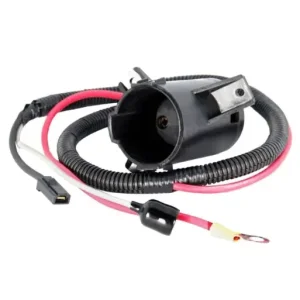
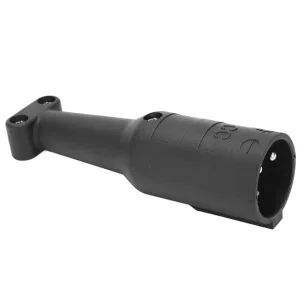
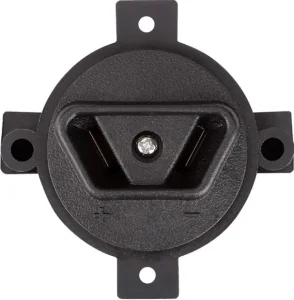
Our research and development processes integrate the design benefits of primary legacy brands such as Club Car, EZGO, and Yamaha. Whether replacing a 48V Club Car Precedent receptacle or a 36V 2-Prong EZGO plug, our electrical systems offer drop-in installation with equal or superior performance compared to OEM components.
Customized electrical and charging configurations engineered to match specific real-world environments.
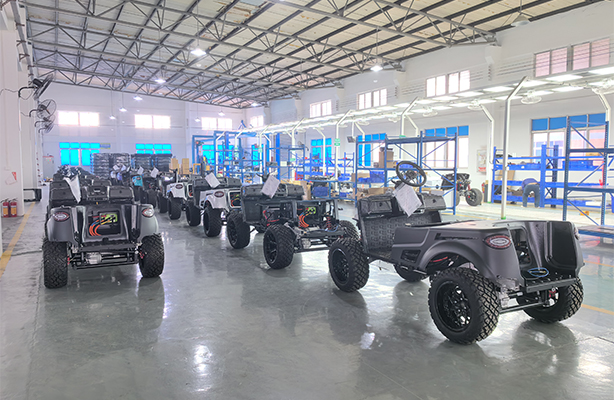
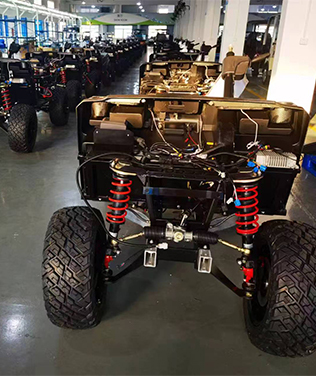
Large-scale municipal and private golf courses require overnight fleet turnaround. Chargers must communicate over standard power drops without tripping circuit breakers. Our smart multi-unit staggered charging technology prevents peak power spikes, saving thousands in electrical infrastructure upgrades.
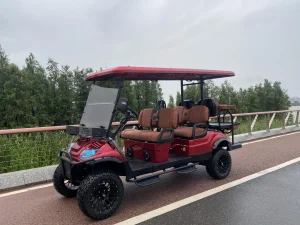
Resorts run 6-seater high-lift passenger buggies continuously. Chargers must offer quick partial charges (opportunity charging) without degrading battery cells. High-efficiency smart thermal throttling ensures safe top-ups during staff lunch breaks.
Industrial settings expose chargers to heavy dust, physical impacts, and severe vibration. Our heavy-duty on-board chargers are enclosed in vibration-isolated cast aluminum shells, preserving electrical integrity on rough concrete and tarmac surfaces.
For custom utility vehicles with heavy auxiliary loads (cargo lifts, light kits, or audio systems), we engineer custom battery chargers paired with heavy-duty 48V DC receptacles and robust fuses. This protects sensitive electronics from sudden current surges.
Answers to complex engineering, regulatory, and purchasing questions from industry professionals.
Under EU Regulation 765/2008, the CE mark represents a declaration of conformity with the LVD (Low Voltage), EMC (Electromagnetic Compatibility), and RoHS (Restriction of Hazardous Substances) directives. Sourcing non-certified chargers poses severe electrical safety risks, legal liability, and custom shipment seizures. As a certified factory, our chargers undergo third-party laboratory verification, and we supply the complete Declarations of Conformity (DoC) and test reports to streamline customs clearance.
Our chargers employ dynamic microprocessor monitoring. During the Constant Current stage, the charger outputs maximum rated current while the battery voltage rises. When the battery cell voltage reaches the defined absorption threshold (e.g., 2.44V per cell for flooded lead-acid, or 3.65V per cell for LiFePO4), the charger automatically shifts to the Constant Voltage stage. The voltage is held constant while current tapers off, preventing overcharging and excessive gassing.
The most common failure points are thermal overload, capacitor dry-out, and plug wear. Cheap designs skimp on thermal management, utilizing undersized heat sinks that cook internal components. Additionally, poorly constructed DC plug terminals corrode and arc, melting the vehicle receptacle. XXCART addresses this by using premium Japanese capacitors, oversized aluminum extrusion cases, and OEM-grade heavy-duty silver-plated copper contacts in all plug assemblies.
No. Lead-acid profiles include high-voltage desulfation and equalization phases that can damage lithium battery management systems (BMS) or trigger cell failure. Lithium batteries require a precise CC/CV profile that terminates charging immediately when cell threshold limits are reached, without a float phase. We offer model variations with custom-tuned microchips calibrated specifically for Lead-Acid, AGM, or Lithium-Ion (LiFePO4) battery setups.
The 3-prong 48V receptacle (such as OEM 103375501 / 101828901) features a specialized sense lead connection. This pin communicates with the vehicle’s onboard computer (OBC) or controller to lock out the vehicle's drive motor while plugged in. This safety mechanism prevents driving away while still connected to the grid, protecting both the vehicle and infrastructure.
We offer comprehensive ODM/OEM capabilities. We can customize the output charging algorithm (custom charge curves for specific battery manufacturers), modify AC input cord styles for regional grids (EU, US, UK, AU), customize DC connectors (3-prong, 2-prong, Anderson connectors, coaxial), and apply custom branding, powder coating, and specialized retail packaging.
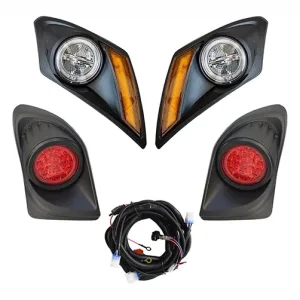
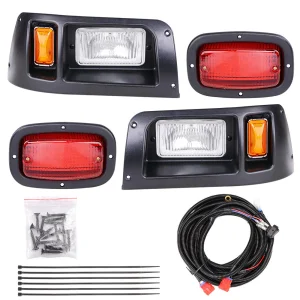
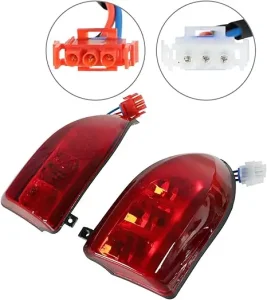
Browse our selection of heavy-duty DC receptacles, structural brackets, electrical harnesses, and lighting safety kits.
 XXCART