Browse our top-tier catalog of certified golf cart replacement components, steering joints, electrical solutions, and structural upgrades engineered for Club Car, EZGO, and Yamaha systems.

Deep insight into engineering excellence, material composition, safety guidelines, and global B2B procurement strategies.
Evaluating a manufacturer's supply line requires reviewing steel grades, dust cover compounds, rotational torque standards, and structural testing methodologies rather than unit cost alone. XXCART INC brings 21+ years of proven manufacturing expertise to solve these exact chassis vulnerabilities.
A breakdown of high-performance engineering, alloy composition, and performance limits for industrial ball joints.
Precision-forged housing built using medium carbon steel or chrome-moly alloys. High-frequency induction tempering raises surface hardness to 58-62 HRC while maintaining a resilient, shock-absorbing interior core to resist sudden shear failures.
To safeguard internal lubricants against grit and moisture ingress, we use heavy-duty CR dust boots. Excellent ozone resistance, UV protection, and chemical stability keep the ball socket sealed through temperatures from -40°C up to 120°C.
Polyoxymethylene (POM) inner bearings ensure low coefficient of friction and zero slip-stick behavior. Pre-packed with complex lithium grease, this setup eliminates regular maintenance cycles while minimizing operational play over a prolonged lifespan.
| Performance Characteristic | OEM Reference Standards | XXCART Heavy-Duty Benchmark | Engineering Benefit |
|---|---|---|---|
| Housing Steel Hardness | 25 - 35 HRC (Soft Mild Steel) | 58 - 62 HRC (Induction Quenched) | Prevents housing deformation under extreme vertical loads. |
| Pull-out / Push-out Force | Min 15 kN force limit | Min 28 kN force limit | Resists decoupling of the ball stud during hard impacts. |
| Salt Spray Resistance (ISO 9227) | 240 Hours (Standard plating) | Over 500 Hours (Zinc-Nickel alloy coating) | Immunity to rust under coastal, golf, and winter conditions. |
| Angular Travel Angle | +/- 18 degrees standard | Up to +/- 22.5 degrees | Facilitates lifted suspensions with dynamic control. |
Addressing the critical supply-chain challenges, logistics security, and configuration specifications for global distributors.
Incoming steel bars are checked via spectrometers to verify correct chemical and mechanical composition before forging.
Automated multi-axis CNC lathes cut and profile the ball stud/housing to sub-micron tolerances, avoiding assembly slop.
Batch samples are subjected to heavy hydraulic pull/push tests to verify mechanical load limits before sealing.
Every outgoing shipping container meets standardized CE safety, health, and environmental protection guidelines.
Our upcoming release focuses on lightweight structural design, using anodized aviation aluminum and carbon-reinforced housings. This yields a 35% component weight decrease while maintaining core shear resilience, optimizing driving range for electric platforms.
Addressing the technical, operational, and distribution questions of global parts sourcing agents and mechanics.
Lift kits alter the steering geometry of the vehicle, putting the control arms and tie rods at steeper angles. This increases the constant sideload and lateral shear stress on the ball joint stud. Standard OEM joints cannot handle these altered force angles, leading to rapid wear of the internal polymer seat. XXCART designs specialized high-angular travel joints with up to +/- 22.5 degrees of clearance to resolve this issue.
Common symptoms include front-end vibration, uneven tire tread wear, directional drift (pulling to one side), and audible squeaks or pops when turning. A physical check involves raising the vehicle and checking for play in the wheel assembly along the vertical axis. Any movement over 1.5mm indicates the internal polymer seat is worn and the joint needs immediate replacement.
We reverse-engineer parts using precise OEM specifications (e.g., Club Car #1011877, EZGO #70895-G01, Yamaha #JN6-F3841-00). We match the tapered stud dimensions, thread configurations, and metal housings exactly. This guarantees a direct bolt-on fit while using upgraded internal alloys and dust boot materials for longer life.
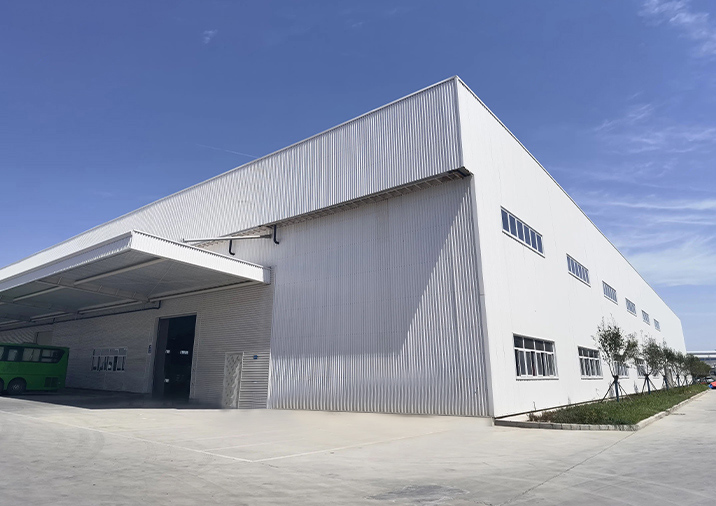
Standard OEM replacement parts in our inventory typically ship within 7 to 15 business days. For customized ODM runs requiring tooling modifications or branded packaging, the lead time runs between 30 and 45 days. Our 50,000㎡ factory footprint allows us to scale production up to 100,000 units per month to support large global contracts.
Explore more premium replacement items, battery accessories, mechanical assemblies, and specialty tools manufactured to the highest ISO standards.

 XXCART