Why Choose a Club Car Golf Cart?

Time:2026-10-13 Author:Henry
0%

Choosing a Club Car Golf Cart begins with a practical question: how will you use it? A quiet ride may serve a golf course, private community, campus, or large property. Club Car models are known for durable frames, familiar controls, and broad service support. These details matter when a cart carries passengers, tools, or groceries each day. Electric versions can offer smooth acceleration and lower routine noise. Gas models may suit longer routes where charging access remains limited.

Look closely at the details.

A careful buyer should compare seating, ground clearance, battery capacity, braking performance, and available safety features. Independent dealers and experienced technicians can explain maintenance needs more clearly than advertising alone. Ask for service records when considering a used cart. Inspect the tires, steering, cables, battery terminals, and charging system. Small corrosion marks can reveal neglected storage. Manufacturer specifications and warranty terms deserve equal attention. Local operating rules may also affect where the cart can travel.

Still, no cart is perfect. A powerful model may feel excessive on narrow paths. A lower-priced used cart may require batteries sooner than expected. Even a respected brand needs regular care. This is where honest evaluation matters. Choose the model that matches your terrain, passenger needs, budget, and maintenance ability. A Club Car Golf Cart can be a dependable investment, but reliability depends on proper selection and consistent upkeep. Test the driving position personally. Listen for unusual noise. The right choice should feel practical, not merely impressive.
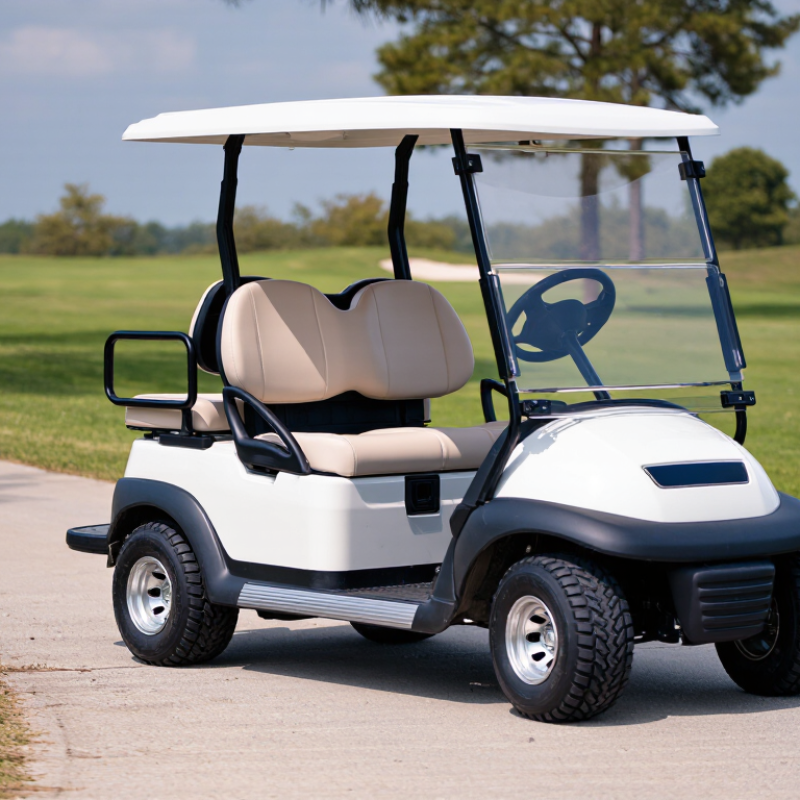
Why Choose a Club Car Golf Cart?

Club Car’s 1958 Heritage and Position in the Golf-Car Industry

In 1958, a small American manufacturer entered the emerging golf-car market. Its early vehicles were simple, practical, and built for short distances. That beginning shaped a lasting approach to personal transportation. The focus stayed on dependable movement across courses, resorts, campuses, and private communities. Decades of field use created valuable experience. It also exposed weaknesses that brochures rarely mention.

A golf cart may face wet grass at dawn, steep paths, tight storage areas, and repeated passenger loading. These conditions test suspension, braking, battery performance, and frame durability. An established manufacturer understands those details through long-term service records and technician feedback. Its position in the industry comes from more than age. It comes from adapting designs as customer needs, energy systems, and safety expectations change. Small improvements matter. A smoother accelerator can help a new driver. Easier battery access can reduce maintenance time.

Still, heritage is not proof of perfection. Older design habits may limit modern efficiency or cabin comfort. Buyers should inspect service support, replacement parts, charging needs, and local terrain. A cart that performs well on a flat fairway may struggle on a sloped property. Real experience requires honest testing, not only a polished showroom visit. That practical balance explains why a long-standing manufacturer continues to attract course managers, property owners, and everyday drivers.

48-Volt Electric Power Compared with ANSI/ILTVA Z130.1-2020 Standards

A 48-volt electric golf cart offers a practical balance between torque, efficiency, and operating control. A typical 48-volt, 170-amp-hour battery stores about 8.2 kilowatt-hours before charging losses. That figure is useful, but it does not equal real driving range. Passenger weight, hills, tire pressure, temperature, and stop-start use can change results quickly. The U.S. Department of Energy’s Alternative Fuels Data Center emphasizes evaluating usable energy and charging efficiency, not voltage alone. Real operation is less tidy.

ANSI/ILTVA Z130.1-2020 gives manufacturers and operators a structured benchmark for safety, testing, labeling, and vehicle performance. A 48-volt system does not prove compliance. Buyers should check braking performance, steering response, guards, warning labels, battery protection, and charger compatibility against documented requirements. Field inspections matter. Small details matter more than expected. The National Golf Foundation reported approximately 531 million golf rounds in the United States during 2023, highlighting the demanding, repeated use these vehicles may face. For a facility manager, that workload makes predictable acceleration and controlled stopping more valuable than headline speed. I would also question advertised range unless the test conditions are disclosed. Claims based on light loads and flat pavement can mislead. A careful comparison should connect electrical specifications with standard-based testing records and maintenance experience.

Why Choose a 48-Volt Electric Golf Cart? — Electric Power Compared with ANSI/ILTVA Z130.1-2020 Standards
Comparison Dimension Typical 48-Volt Electric Golf Cart ANSI/ILTVA Z130.1-2020 Relevance Practical Advantage
Electrical System Uses a nominal 48-volt direct-current traction system. Battery configurations may include four 12-volt batteries or eight 6-volt batteries, depending on the vehicle design. The standard focuses on golf-car safety design and operation rather than prescribing one universal battery voltage. A 48-volt architecture can deliver useful driving performance while keeping current lower than an equivalent lower-voltage system at the same power output.
Energy Storage Available driving range depends on battery chemistry, rated amp-hour capacity, terrain, payload, temperature, tire pressure, driving style, and battery condition. Safety compliance does not establish a single required range or battery capacity. The complete vehicle should be evaluated for safe operation under its intended load and conditions. The system can be selected for short-course, campus, resort, neighborhood, or utility applications without assuming that every 48-volt vehicle has the same range.
Charging A dedicated charger converts AC input into controlled DC charging power. Charging time varies with battery capacity, state of charge, charger output, battery temperature, and battery chemistry. Safe charging requires following the vehicle and battery manufacturer’s instructions, using compatible equipment, and maintaining appropriate ventilation and electrical protection where applicable. Regular overnight charging can support predictable daily operation without liquid-fuel storage or engine warm-up.
Noise and Local Emissions The traction motor produces no tailpipe emissions during operation and generally operates more quietly than an internal-combustion drive system. The standard addresses golf-car safety; it does not establish a universal noise or tailpipe-emission performance rating. Lower operating noise and no tailpipe emissions are useful in facilities, residential communities, campuses, and other areas where disturbance matters.
Braking and Parking Electric carts commonly use mechanical service brakes, a parking brake, and in some designs regenerative braking. Exact equipment varies by vehicle. ANSI/ILTVA Z130.1-2020 includes safety considerations related to vehicle control, braking, parking, and operation. The specific vehicle should be checked against the applicable edition and documentation. A properly maintained braking and parking system helps control the cart on slopes, during loading, and in pedestrian areas.
Steering and Stability Handling depends on wheelbase, track width, suspension, tires, load distribution, speed control, and the surface being driven on. The standard provides safety guidance for design and operation, including vehicle control and stability-related considerations. It does not make every configuration suitable for every terrain. Choosing the correct configuration and staying within the rated occupant and cargo limits supports predictable handling.
Occupant and Cargo Protection Safety equipment may include seat belts, handholds, foot platforms, mirrors, lights, reflectors, guards, and operator warnings, depending on configuration and intended use. ANSI/ILTVA Z130.1-2020 addresses safety features, warnings, guarding, and operating practices relevant to golf cars. Equipment must be verified on the actual vehicle. Matching the safety equipment to passenger capacity, cargo, traffic conditions, and operating environment reduces avoidable risk.
Speed and Intended Use Maximum speed is controlled by the vehicle’s drive system and settings. It must remain within the manufacturer’s rating and local legal requirements. The standard should be used together with applicable traffic laws, site rules, signage, and operator training; it does not replace local road-approval requirements. A correctly configured speed limit improves controllability and helps match the cart to pedestrian zones, private paths, and permitted low-speed roads.
Maintenance Requirements Maintenance may include battery inspection, terminal and cable checks, charging-system checks, tire inspection, brake adjustment, steering checks, and cleaning. Lithium-ion systems may require different service procedures from lead-acid systems. Safe maintenance and inspection are consistent with the standard’s emphasis on vehicle condition, protective systems, and safe operation. Manufacturer instructions remain essential. A documented inspection routine helps preserve range, braking performance, battery life, and overall operating safety.
Compliance Verification Performance and safety vary by model, configuration, accessories, modifications, battery type, and service history. ANSI/ILTVA Z130.1-2020 should be treated as a reference for applicable golf-car safety practices. Confirm conformity through the vehicle’s technical documentation, inspection records, and qualified evaluation. Verification prevents assumptions based solely on the 48-volt rating and supports responsible selection for the intended application.

Note: A 48-volt rating describes the nominal electrical architecture, not a guarantee of speed, range, payload, or compliance. Always confirm the vehicle’s actual specifications, safety equipment, intended-use limitations, and applicable local requirements.

Total Cost of Ownership Using Golf-Fleet Operating Metrics

Choosing a golf cart should begin with total cost of ownership, not the purchase price. Fleet managers usually track utilization, energy use, maintenance hours, downtime, and resale value. These figures reveal how each vehicle performs during real operations.

A cart completing 1,200 service hours annually may justify a higher initial cost. Reliable batteries reduce charging interruptions and unplanned labor. Preventive inspections also protect tires, brakes, steering components, and electrical connections. Record every repair, even small fixes. A loose terminal today can become a missed rental block tomorrow.

Energy cost deserves close attention. Measure electricity per charging cycle and compare it with daily route length. Monitor battery age, charging behavior, and average operating temperature. Maintenance cost per operating hour is especially useful for mixed fleets. It exposes vehicles that appear inexpensive but consume technician time. Downtime matters too. A cart unavailable during a busy weekend can cost more than its repair invoice.

Resale value should enter the calculation from day one. Clean service records often support stronger secondhand pricing. However, forecasts remain imperfect. Weather, terrain, driver habits, and seasonal demand can distort results. A spreadsheet can still lie. Review monthly data against workshop notes and driver feedback. That combination creates a more credible ownership picture than a brochure estimate.

Why Choose an Electric Golf Cart? — Total Cost of Ownership Using Golf-Fleet Operating Metrics

Illustrative five-year fleet benchmark comparing an electric golf cart with a gasoline utility cart. Values are shown in USD per vehicle and use common fleet-planning assumptions.

The model assumes 250 operating days per year, electricity at $0.16/kWh, gasoline at $3.50 per gallon, 4.5 kWh of charging energy per electric-cart operating day, and 0.4 gallons of fuel per gasoline-cart operating day. Over five years, the estimated total cost is $17,100 for the electric cart versus $18,400 for the gasoline cart. Actual results vary with purchase price, utilization, local energy rates, terrain, and maintenance practices.

Lithium-Ion Battery Range, Charging Cycles, and Lifecycle Data

Why Choose a Club Car Golf Cart?

Lithium-Ion Battery Range, Charging Cycles, and Lifecycle Data

A lithium-ion golf cart can deliver predictable daily performance when its battery is correctly sized. In practical use, range often falls between 25 and 50 miles per charge. This estimate changes with terrain, passenger weight, speed, tire pressure, and temperature. A cart climbing wet hills uses energy quickly. Cold mornings can reduce available range.

Charging cycles deserve careful attention. One cycle means using the equivalent of 100% battery capacity, not simply plugging in once. Two 50% discharges usually equal one cycle. Many lithium packs are rated for roughly 2,000 to 3,000 full-equivalent cycles. Real results depend on heat, charging habits, storage, and battery management software. Keep the pack away from extreme temperatures. Use the approved charger.

The lifecycle may reach five to ten years in moderate recreational service. Fleet vehicles working every day may age sooner. I have found that range complaints often begin with tire pressure or uneven loads, not battery failure. That detail is easy to miss. A useful maintenance record should track mileage, charge percentage, charging time, and unusual heat. A battery that suddenly loses 20% range deserves testing, not guesswork. Laboratory figures can look better than everyday results.

Safety, Accessibility, and Compliance with ANSI and SAE Guidelines

Why Choose a Club Car Golf Cart?

A well-designed golf cart should make every trip feel controlled, predictable, and comfortable. Safety begins with stable handling, responsive brakes, clear lighting, and secure seating. Small details matter. Wide steps can reduce awkward entry, while sturdy handholds help older passengers or anyone with limited balance. Controls should be easy to identify without forcing the driver to look away from the path.

Accessibility also depends on practical design. A lower step-in height, supportive seats, and adequate legroom can improve daily use around resorts, campuses, neighborhoods, or private facilities. Operators should check whether passengers can enter and exit without twisting sharply. That simple test often reveals more than a sales brochure. Rear visibility, mirrors, warning signals, and a quiet but noticeable operating sound deserve attention too.

Reliable manufacturers and service teams should explain how their vehicles are evaluated against relevant ANSI and SAE guidelines. These guidelines can address areas such as electrical systems, braking performance, lighting, occupant protection, and safe operation. Compliance is not a vague promise. Ask for current technical records, maintenance instructions, and inspection procedures. Requirements may also differ by location and intended use. A cart used only on private property may face different expectations than one operated near public traffic. Not always obvious. Before purchase, have a qualified technician inspect the tires, battery connections, steering, restraints, and charger. Even a new cart deserves a careful check.

FAQS

How far can a lithium-ion golf cart travel on one charge?

Typical range is 25 to 50 miles per charge. Wet hills, heavy passengers, low tire pressure, and cold weather reduce distance. Real routes vary.

What does one charging cycle mean?

One cycle equals using 100% of the battery’s capacity. Two separate 50% discharges usually equal one full cycle. Plugging in once does not automatically mean one cycle.

How many charging cycles can the battery provide?

Many lithium-ion packs support about 2,000 to 3,000 full-equivalent cycles. Heat, storage conditions, charging habits, and battery controls affect the result. Laboratory numbers may look better.

How long can the battery last?

Moderate recreational use may provide five to ten years of service. Vehicles used daily by fleets can age sooner. Usage matters most.

What should owners track during battery maintenance?

Record mileage, charge percentage, charging time, and unusual heat. A sudden 20% range loss deserves testing. Do not guess.

How can tire pressure affect driving range?

Underinflated tires increase rolling resistance and consume more energy. Uneven passenger or cargo loads can also reduce efficiency. Check both sides.

What safety features should a golf cart include?

Look for stable handling, responsive brakes, clear lights, secure seats, mirrors, and warning signals. Wide steps and strong handholds support safer entry. Small details count.

How can accessibility be evaluated before purchase?

Check step-in height, seat support, legroom, and exit movement. Passengers should enter without sharp twisting or unstable footing. Try the seats personally.

What technical records should buyers request?

Ask for maintenance instructions, inspection procedures, and records showing evaluation against relevant safety guidelines. Requirements can differ by location and intended use. Confirm the details.

Should a new golf cart receive an inspection?

Yes. A qualified technician should check tires, steering, restraints, battery connections, and the charger. Even new equipment can have overlooked issues. That is worth remembering.

Conclusion

A Club Car Golf Cart represents a practical combination of heritage, efficiency, and modern utility. Since entering the golf-car industry in 1958, the brand has helped shape expectations for dependable transportation on courses, campuses, resorts, and private properties. Its 48-volt electric power system offers quiet operation, responsive performance, and efficient energy use while supporting design considerations related to ANSI/ILTVA Z130.1-2020 guidelines.

From a fleet-management perspective, total cost of ownership depends on purchase price, energy consumption, maintenance, battery replacement, and vehicle uptime. Lithium-ion batteries can provide consistent range, shorter charging times, numerous charging cycles, and a longer service life when properly managed. Safety and accessibility are also important, including stable handling, effective braking, clear controls, and responsible seating design. By aligning operation and maintenance practices with applicable ANSI and SAE guidance, users can improve reliability, manage long-term costs, and enjoy a comfortable, compliant, and versatile electric vehicle for recreational or practical transportation needs.


Henry

Henry

Henry is a dedicated marketing professional with a profound expertise in the company's offerings. With years of experience in the industry, he possesses an impressive understanding of the market dynamics and consumer behaviors that drive success. Henry is committed to sharing his insights through......