China Best Street Legal Golf Cart Manufacturers

Time:2026-10-18 Author:Ethan
0%

China’s Street Legal Golf Cart industry is moving from resort pathways into planned communities, campuses, and short-distance urban transport. Market studies support this shift. Fortune Business Insights valued the global golf cart market at approximately USD 1.7 billion in 2023. Its report also forecasts continued growth through 2032, driven by electric models and low-speed mobility demand. Grand View Research identifies battery-powered vehicles as a major market segment, especially where quiet operation and lower operating costs matter.

The best Chinese manufacturers combine practical engineering with export experience. Their factories may produce aluminum frames, lithium battery systems, hydraulic brakes, LED lighting, mirrors, seat belts, and programmable controllers. These details matter on a rainy neighborhood road, not only in a showroom. Buyers should examine production consistency, battery certifications, braking performance, charger quality, and after-sales support. Compliance remains local. In the United States, low-speed vehicles generally relate to Federal Motor Vehicle Safety Standard 500, while state and municipal rules may add equipment or registration requirements. Other markets use different approval systems.

A catalog is not proof.

This is where supplier evaluation becomes difficult. Some companies describe vehicles as “street legal” without explaining the target jurisdiction or testing basis. That wording deserves careful review. A reliable manufacturer should provide traceable specifications, inspection records, warranty terms, and clear delivery responsibilities. No ranking is perfect, and factory scale alone cannot guarantee quality. This guide examines China’s leading Street Legal Golf Cart manufacturers through product capability, compliance awareness, customization, manufacturing control, and real-world support. The goal is practical guidance, not promotional praise.
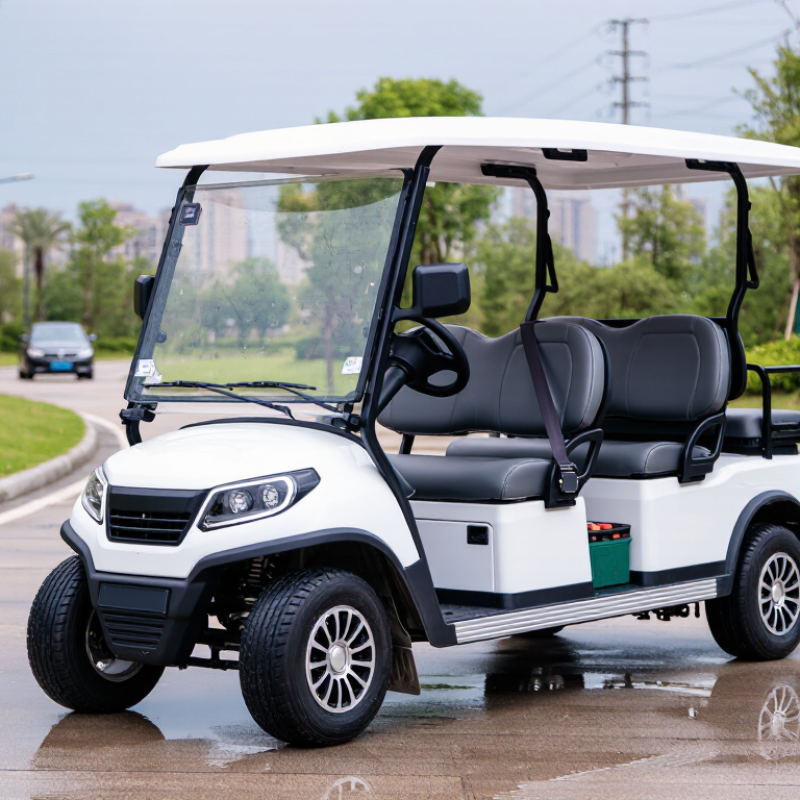
China Best Street Legal Golf Cart Manufacturers

China’s Street-Legal Golf Cart Industry: An Overview

China’s street-legal golf cart industry has expanded beyond private resorts and gated communities. Manufacturers now develop compact electric vehicles for approved public roads. Their designs commonly include headlights, brake lights, turn signals, mirrors, seat belts, windshields, and road-rated tires. However, legal requirements differ between countries, provinces, and municipalities. A vehicle approved in one area may need further inspection elsewhere.

Reliable manufacturers usually begin with compliance planning, not decoration. They review local speed limits, vehicle dimensions, braking performance, battery protection, and identification documents. Factory audits should examine welding quality, wiring insulation, charger safety, and final testing records. Battery range also deserves careful review. Real performance changes with temperature, passengers, hills, and cargo. Specifications can look complete, yet practical testing may reveal gaps. That is an important weakness buyers should acknowledge.

Tips: Request conformity documents before discussing volume orders. Check whether lighting and mirrors meet your target market’s rules. Ask for brake-test results and battery warranty terms. Inspect several finished units, not only a showroom sample. A useful review should include cold starts, hill climbs, tight turns, and emergency braking. Do not rely on appearance alone. Careful documentation, transparent testing, and responsive technical support are stronger signs of a dependable manufacturing partner.

China’s Street-Legal Golf Cart Industry: An Overview

China’s street-legal golf cart sector benefits from the country’s expanding electric-vehicle supply chain. The chart shows China’s annual new-energy vehicle production, domestic sales, and exports from 2020 to 2024, providing market context for electric low-speed vehicle sourcing and manufacturing.

Source: China Association of Automobile Manufacturers annual industry releases, 2020–2024. Figures are in millions of vehicles and cover new-energy passenger and commercial vehicles; they are not golf-cart-specific sales figures. Street legality for golf carts depends on vehicle configuration and local Chinese regulations.

Key Features and Legal Standards for Road-Ready Golf Carts

China Best Street Legal Golf Cart Manufacturers

Key Features and Legal Standards for Road-Ready Golf Carts

Road-ready golf carts need more than a quiet electric motor. They should include headlights, taillights, brake lights, turn signals, reflectors, mirrors, and a visible slow-moving vehicle emblem. Seat belts, a parking brake, a windshield, and a reliable horn also support safer daily travel. Small details matter. A loose mirror can limit visibility at an intersection.

In the United States, many low-speed vehicles must meet Federal Motor Vehicle Safety Standard 500. This commonly involves a top speed between 20 and 25 mph, along with required lighting, safety belts, glazing, and identification markings. Local rules may also require registration, insurance, a driving license, and specific road access. Requirements differ by state and municipality, so a factory claim alone is not enough. Buyers should request test records, wiring diagrams, component certificates, and the vehicle identification number before ordering.

A dependable manufacturer should explain battery chemistry, charging protection, braking performance, and weather resistance in clear language. During inspection, check the brake response, tire markings, steering play, and charging connector. Ask whether replacement parts remain available after several years. No checklist is flawless. A cart may satisfy production standards yet perform poorly on steep, wet roads. That gap deserves honest testing, not polished advertising. Have a qualified local inspector review the vehicle before registration and regular road use.

Leading Manufacturing Regions and Production Capabilities in China

China’s street legal golf cart manufacturing is concentrated in several strong industrial regions.

Guangdong benefits from mature electric vehicle supply chains, skilled welders, and convenient export logistics. Factories there often produce aluminum or steel frames, plastic body panels, lighting systems, and dashboard assemblies.

Jiangsu and Zhejiang offer dense networks of motor, battery, controller, and metalworking suppliers. Their manufacturers commonly support small-batch customization, including enclosed cabins, upgraded suspension, weather protection, and commercial seating layouts. Shandong also has experience with utility vehicles and low-speed transport platforms. Production may include laser cutting, robotic welding, powder coating, wiring, and final road testing.

Capability is not measured by factory size alone. Buyers should inspect welding consistency, battery traceability, brake testing, lighting certification, and spare-parts records. Ask for inspection reports, production photos, and sample units from the same assembly line. Documentation matters.

Street legality depends on the destination market. A Chinese manufacturer can design vehicles around requested specifications, but local authorities decide registration requirements. This distinction is often overlooked. Some suppliers communicate confidently, yet their technical files may need improvement. Independent inspection can reveal weak sealing, uneven panel gaps, or incomplete testing records. I have found that practical factory visits often explain more than polished catalogs. The best evaluation combines production evidence, engineering communication, and after-sales planning.

How to Evaluate China’s Best Street-Legal Golf Cart Manufacturers

China Best Street Legal Golf Cart Manufacturers

Evaluating a street-legal golf cart manufacturer requires more than comparing prices. “Street legal” depends on the destination market, local speed limits, lighting rules, and registration procedures. Ask each supplier for test reports, conformity documents, battery safety records, and clear production specifications. The paperwork should match the exact vehicle, not a similar model.

Inspect the vehicle closely. Check braking distance, steering response, seat-belt anchorage, mirrors, lamps, reflectors, tires, and the speed-control system. Examine welds under the frame and wiring near the battery compartment. Request a sample unit before placing a large order. An independent laboratory can verify key safety claims. A factory video is useful, but it is not proof.

Manufacturer reliability also appears after delivery. Review warranty terms, spare-parts availability, response times, and technician training. Ask how failed batteries, chargers, and controllers are tracked. During a factory visit, observe final inspection and road testing. No factory is perfect. A supplier that admits occasional defects may be more credible than one promising zero problems. Still, vague answers deserve caution. Compare production records, inspect random units, and confirm that export documents support registration in your intended market.

Purchasing, Customization, Compliance, and Export Considerations

China Best Street Legal Golf Cart Manufacturers should be evaluated beyond unit price. Grand View Research estimates the global golf cart market was worth about USD 1.8 billion in 2023. That growth attracts many suppliers, but specifications still vary widely. Buyers should request battery data, motor ratings, range tests, warranty terms, and a complete parts list. A low quotation may hide weak suspension, undersized wiring, or expensive replacement batteries. It happens.

Customization should follow the destination market, not only appearance. In the United States, low-speed vehicles generally require equipment aligned with FMVSS 500, including lamps, mirrors, seat belts, windshield, and a vehicle identification number. Local registration rules may add insurance or inspection requirements. European buyers should verify applicable type-approval requirements before production. Compliance documents must match the exact vehicle configuration. A certificate for another model is not enough. For export, confirm the correct customs classification, commercial invoice, packing list, and battery transport documents. Lithium batteries may require UN 38.3 testing and approved packaging. The International Trade Centre highlights the importance of accurate product classification in reducing customs delays. Factory audits, pre-shipment inspections, and sample road testing improve reliability. Still, test results can change after customization. Recheck the final unit, especially braking distance, lighting alignment, charging safety, and corrosion protection. The paperwork is only useful when the delivered cart matches it.

China Best Street Legal Golf Cart Manufacturers - Purchasing, Customization, Compliance, and Export Considerations

Practical reference table for evaluating suppliers, specifications, regulatory readiness, and international shipment requirements.

Evaluation Area Key Dimension Typical Reference Data Buyer Verification Point Export Consideration
Purchasing Vehicle configuration Common configurations include 2-, 4-, 6-, and 8-passenger models. Seating capacity affects wheelbase, curb weight, turning radius, and freight volume. Request a dimension drawing, passenger capacity, payload rating, curb weight, and turning-radius specification. Confirm whether the selected body size fits the planned container-loading method and destination road rules.
Power system Electric models commonly use lead-acid or lithium-ion battery systems. Battery voltage, capacity, charger type, and motor rating vary by model and load requirement. Compare battery chemistry, rated voltage, ampere-hours or kilowatt-hours, charging time, warranty, and replacement cost. Lithium batteries may require dangerous-goods documentation and transport approval depending on shipment method.
Performance requirements Low-speed electric carts often have maximum speeds in the approximate range of 25–40 km/h, but legal limits differ by jurisdiction and vehicle classification. Ask for tested top speed, gradeability, braking distance, range test conditions, and the applicable test standard. Do not treat a manufacturer’s claimed range as universal; temperature, passenger load, terrain, speed, and battery age affect results.
Minimum order quantity Stock units may be available in small quantities, while customized colors, upholstery, batteries, and body tooling may require a higher order volume. Obtain separate quotations for stock configuration, semi-custom configuration, and fully customized production. Clarify whether export packaging, spare parts, inspection, and documentation are included in the quoted price.
Warranty and after-sales support Commercial warranties commonly specify separate coverage periods for the complete vehicle, battery, motor, controller, and charger. Request written warranty exclusions, response times, spare-parts availability, troubleshooting procedures, and service contacts. Define who pays for replacement-part freight, customs charges, remote technical support, and warranty returns.
Customization Safety equipment Potential equipment includes seat belts, mirrors, lighting, turn signals, reflectors, windscreen, windshield wipers, horn, parking brake, and vehicle identification markings. Use a destination-country checklist rather than assuming that a golf-course configuration is road legal. Safety equipment may need to meet specific placement, color, visibility, or performance requirements in the destination market.
Body and interior options Common options include roof styles, doors, cargo beds, rear-facing seats, upholstery materials, weather protection, storage compartments, and different wheel designs. Approve a signed specification sheet, drawings, color samples, and a pre-production sample where appearance is important. Added options can change vehicle weight, axle loads, dimensions, shipping volume, and compliance status.
Electrical customization Possible changes include battery capacity, onboard charger, charging connector, DC-DC converter, instrument display, USB outlets, lighting, and telematics. Verify voltage compatibility, charging frequency, connector type, fuse protection, wiring diagrams, and replacement-part availability. Destination electrical standards and charging infrastructure should be confirmed before production approval.
Branding and documentation Private-label projects may include color matching, decals, manuals, warning labels, packaging marks, and customized spare-parts lists. Specify artwork format, label language, intellectual-property ownership, revision control, and approval procedures. Safety labels and user manuals may need translation and destination-market information before customs clearance or registration.
Compliance Vehicle classification A cart used on private property may be regulated differently from a low-speed vehicle intended for public roads. Classification can depend on speed, weight, seating, equipment, and intended use. Identify the exact destination-country vehicle category before selecting the model or approving production. A “street legal” description is not automatically valid in every country, state, province, or municipality.
Road equipment Road-use requirements may cover headlights, tail lamps, brake lamps, turn indicators, reflectors, mirrors, seat belts, horn, windshield, wipers, and parking brake. Request equipment photographs, wiring diagrams, component specifications, and test evidence for the intended market. Equipment must be installed and adjusted according to the applicable local rules, not merely supplied in the carton.
Conformity and testing Depending on the market, authorities or registrars may request technical files, declarations, test reports, certificates, identification numbers, or third-party inspection. Check that documents identify the same model, battery system, motor, controller, and safety configuration as the purchased vehicle. Certification needs should be confirmed with the destination authority, importer, or qualified compliance professional.
Battery and charger safety Battery systems require suitable protection against overcharge, over-discharge, short circuit, overheating, and mechanical damage. Charger output must match the battery system. Request battery datasheets, safety test documentation, charger specifications, installation instructions, and emergency procedures. Lithium battery transport may require applicable UN testing evidence, dangerous-goods declarations, labels, and approved packaging.
Registration and insurance Public-road operation may require registration, title or ownership documents, license plates, driver licensing, inspection, and liability insurance. Confirm the complete registration process and whether the importer or end user is responsible for each step. Budget for local taxes, inspection fees, registration charges, insurance, and possible modifications after arrival.
Export Shipping terms Common trade terms include EXW, FOB, CIF, and DAP. Each term allocates different responsibilities for transport, insurance, customs, and risk. State the agreed Incoterms® rule and named place in the purchase contract and commercial invoice. Use a landed-cost calculation that includes inland transport, ocean or air freight, duties, taxes, port charges, and local delivery.
Container planning Loading quantity depends on vehicle dimensions, folded or assembled condition, battery packaging, crate design, and whether additional parts are packed inside the vehicle. Request a container-loading plan showing packed dimensions, gross weight, cubic volume, securing method, and loading photographs. Oversized units or non-stackable crates can significantly increase freight cost even when the vehicle price is competitive.
Shipping documents Typical documents may include a commercial invoice, packing list, bill of lading, certificate of origin, product manual, and battery or dangerous-goods documentation where applicable. Check that model numbers, quantities, weights, values, consignee details, and battery descriptions are consistent across all documents. Incorrect battery declarations or inconsistent customs descriptions can cause delays, storage fees, or shipment rejection.
Customs classification The appropriate HS classification depends on vehicle design, propulsion, speed, intended use, and the importing country’s tariff interpretation. Verify the tariff code with the destination customs authority or a licensed customs broker before shipment. Do not rely solely on a supplier-provided code; duty rates and import controls can differ by country.
Pre-shipment inspection Inspection should cover vehicle identity, quantity, dimensions, finish, safety equipment, electrical operation, brakes, lights, charging, accessories, and packaging condition. Use an approved inspection checklist and require photographs, video evidence, and signed acceptance records before final payment. Record battery state, serial numbers, spare parts, and damage-sensitive areas to support insurance or claims handling.

Important: Street-legal status is determined by the laws and approval procedures of the destination jurisdiction. Confirm current requirements with the relevant transport authority, customs broker, importer, and insurance provider before purchase or shipment.

FAQS

What safety equipment should a road-ready golf cart include?

It should have headlights, taillights, brake lights, turn signals, reflectors, mirrors, and a horn.

What speed range commonly applies to low-speed vehicles?

Many low-speed vehicles operate between 20 and 25 miles per hour.

Do road requirements differ between locations?

Yes. States and municipalities may require registration, insurance, a driving license, and approved road access.

What documents should buyers request before ordering?

Request test records, wiring diagrams, component certificates, and the vehicle identification number.

Which manufacturing regions offer useful production capabilities?

Guangdong has electric vehicle suppliers, skilled welding teams, and convenient export logistics.

How can buyers evaluate factory quality?

Inspect welding consistency, battery traceability, brake testing, lighting certification, and spare-parts records.

What should be checked during a vehicle inspection?

Test brake response, tire markings, steering play, charging connections, and weather resistance.

How important are replacement parts and after-sales support?

Confirm that batteries, lights, controllers, brake parts, and body components will remain available.

Conclusion

China’s street-legal golf cart industry is developing rapidly, supported by strong manufacturing capacity, flexible supply chains, and growing demand for low-speed electric transportation. A Street Legal Golf Cart is designed for approved public-road use and typically includes essential safety and visibility features such as lighting, mirrors, seat belts, turn signals, braking systems, and identification equipment. Manufacturers must also adapt vehicles to the destination market’s technical, safety, and registration requirements.

When evaluating China’s best manufacturers, buyers should assess engineering expertise, production quality, testing procedures, customization options, battery performance, after-sales support, and export experience. Major production regions offer different strengths, including efficient assembly, component integration, and large-scale manufacturing. Before purchasing, importers should clearly define vehicle specifications, driving conditions, passenger capacity, branding needs, documentation, shipping terms, and compliance responsibilities. Careful factory audits, sample testing, and communication about local road-use standards can help ensure that the final vehicle is safe, reliable, properly configured, and suitable for its intended market.


Ethan

Ethan

Ethan is a seasoned marketing professional with a deep expertise in our company's innovative product line. With a passion for sharing knowledge and insights, he takes the lead in regularly updating our corporate blog, where he explores industry trends, product features, and effective marketing......